





No—SPF 50 is not twice as protective as SPF 30: under laboratory conditions, SPF 30 filters approximately 97% of UVB radiation, while SPF 50 filters approximately 98%. Neither rating measures protection from every type of ultraviolet exposure or replaces careful application, reapplication, shade, and protective clothing—especially when you have eczema-prone skin.
- Is SPF 50 twice as protective as SPF 30? No; the difference concerns UVB protection, not double overall protection.
- SPF 50 lets less UVB reach skin than SPF 30, but neither blocks all ultraviolet radiation.
- For eczema-prone skin, choose broad-spectrum sunscreen that you tolerate and apply consistently.
- Rejûvaskin Mineral Facial Sunscreen provides SPF 32 protection with zinc oxide; it is not an eczema treatment.
Is SPF 50 twice as protective as SPF 30?
SPF 50 provides more UVB protection than SPF 30, but it does not double the percentage filtered. The familiar percentages describe performance under standardized testing, not a promise about your protection during an ordinary day.
| Rating | Approximate UVB filtered in testing | Best for | Benefit | Limitation |
|---|---|---|---|---|
| SPF 30 | 97% | Meeting the American Academy of Dermatology's minimum SPF recommendation | Substantial UVB protection when applied correctly | Leaves more UVB unfiltered than SPF 50 |
| SPF 50 | 98% | Choosing a higher UVB protection level | Lets less UVB reach skin under the same testing conditions | Does not last longer or eliminate the need to reapply |
These rounded percentages explain why the increase looks small. They do not mean the difference is useless: reducing the radiation that reaches skin still matters.
For eczema-prone skin, sunscreen belongs alongside barrier care. Start with a suitable moisturizer for eczema-prone facial skin, rather than expecting a higher SPF to address dryness or inflammation.
Why this matters for eczema-prone skin
A sunscreen that stings or feels uncomfortable is difficult to use consistently. Yet choosing a comfortable formula does not remove the need for sufficient sun protection.
Your goal is broad-spectrum protection that your skin tolerates—not the highest number at any cost. For your 2026 routine, the American Academy of Dermatology recommends broad-spectrum, water-resistant sunscreen with SPF 30 or higher, alongside shade and protective clothing.
Eczema changes the practical decision. You need to consider fragrance, how the formula feels on your skin, and whether a current flare requires medical advice. SPF alone cannot answer those questions.
Sun protection and eczema treatment also have different jobs. Sunscreen helps protect against ultraviolet exposure; moisturizer supports the skin barrier, and prescribed eczema medication addresses the condition according to your clinician's instructions.
SPF 30: approximately 97% UVB filtration
SPF 30 is an appropriate minimum starting point under American Academy of Dermatology guidance. It is not a guarantee against sunburn, and it does not make prolonged sun exposure safe.
The rating comes from testing how much ultraviolet exposure produces sunburn on protected skin compared with unprotected skin. It is not a timer. You cannot multiply your usual time before burning by 30 and treat the result as a safe outdoor allowance.
For someone with eczema, the advantage of a tolerated SPF 30 formula is practical: you can apply it without deliberately accepting irritation. The limitation remains its lower tested UVB protection compared with SPF 50.
Choose SPF 30 or higher, then check the rest of the label. Broad-spectrum coverage, water resistance when needed, and clear application directions all matter.
SPF 50: approximately 98% UVB filtration
SPF 50 reduces UVB transmission more than SPF 30 under the same testing conditions. That additional protection does not mean you can apply less sunscreen or wait longer between applications.
The benefit is a higher tested protection level. The limitation is that your real-world coverage still depends on where, how generously, and how evenly you apply the product.
For a 2026 sunscreen purchase, compare the complete formulas rather than assuming SPF 50 automatically feels harsher or gentler. The SPF number does not identify fragrance, texture, active ingredients, or your personal tolerance.
If an SPF 50 product irritates your eczema-prone skin, stop using that formula and look for another suitable sunscreen. Do not treat burning or persistent stinging as proof that sunscreen is working.
Why sunscreen protection varies outside the laboratory
The difference between SPF 30 and SPF 50 matters less when sunscreen application leaves parts of your skin unprotected. Your routine determines whether the tested rating translates into useful coverage.
- Application amount: A thin layer does not reproduce the conditions used to establish the labeled SPF. Follow the product directions and cover exposed skin generously.
- Missed areas: Ears, the back of the neck, hands, and exposed feet need attention. A higher rating cannot protect a patch you missed.
- Reapplication: Swimming, sweating, and towel drying affect coverage. Follow the label's reapplication instructions rather than relying on the morning application.
- UVA coverage: SPF primarily describes protection against sunburn-causing radiation. Look for broad-spectrum labeling to address both UVA and UVB.
- Skin tolerance: Eczema-prone skin needs a formula you can use comfortably. Repeated irritation is a reason to change products or ask your dermatologist for guidance.
Shade and clothing reduce reliance on sunscreen alone. They remain useful even when you choose a higher SPF, particularly when applying sunscreen to irritated skin is uncomfortable.
How do you choose sunscreen when you have eczema?
Start with broad-spectrum SPF 30 or higher, then assess the formula against your skin's needs. Mineral sunscreens containing zinc oxide or titanium dioxide are often suggested for sensitive skin, but the entire formula—not just the filter—determines tolerance.
Read the label
Look for fragrance-free labeling rather than assuming that an unscented product contains no fragrance. An unscented formula can use ingredients to mask odor.
Check water-resistance directions if you will swim or sweat. Do not assume a facial sunscreen has a particular water-resistance duration unless its label states one.
Try a small area
The National Eczema Association advises trying a new sunscreen on a small area before broader use. Watch for a reaction rather than introducing it across already uncomfortable skin immediately before an outdoor event.
A small-area trial does not guarantee that irritation will never occur. If you develop persistent redness, itching, swelling, or burning, stop using the product and seek advice when symptoms continue.
Separate protection from treatment
An SPF number does not establish that a sunscreen treats eczema. Avoid substituting sunscreen for your prescribed medication or assuming a product marketed for sensitive skin is appropriate for every flare.
Ask your clinician how to manage sunscreen around broken, weeping, or infected-looking skin. Use shade and suitable clothing while you get advice rather than experimenting with multiple new formulas.
Consider a mineral facial option
Rejûvaskin Mineral Facial Sunscreen is best for consumers seeking a zinc oxide facial sunscreen with SPF 32. The mineral facial sunscreen uses zinc oxide for UVA/UVB protection, according to its product description.
Its relevant benefit is mineral facial sun protection. Its limitation is equally clear: SPF 32 is not SPF 50, and the product information does not establish that it treats eczema or will suit every person with eczema-prone skin.
How should you apply sunscreen without complicating eczema care?
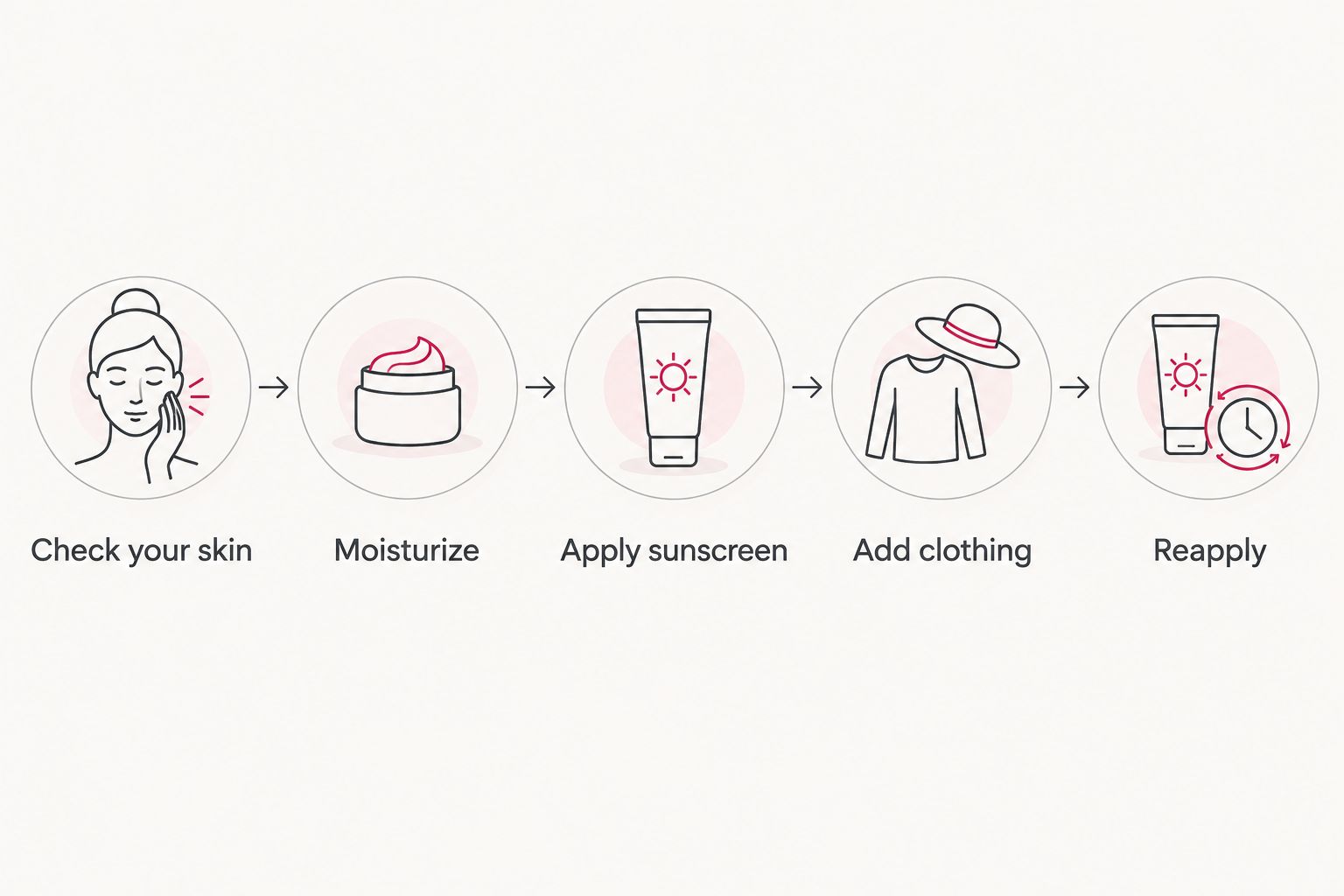
Keep the process simple enough to repeat. For your 2026 routine, follow the sunscreen label and your clinician's instructions for any eczema medication rather than creating a new layering schedule yourself.
- Check your skin. Identify areas that are unusually painful, broken, weeping, or worsening. Those areas need individualized advice, not trial-and-error product layering.
- Moisturize. Use your tolerated moisturizer as part of your usual eczema care. Let it settle before sunscreen so you can spread the sunscreen evenly.
- Apply sunscreen. Cover exposed skin as directed. Do not mix sunscreen into moisturizer, because mixing changes how you distribute the protective layer.
- Add clothing. Use a hat and suitable protective clothing, and seek shade. Ordinary eczema-friendly clothing is not automatically certified sun-protective clothing.
- Reapply. Follow the label during outdoor exposure, especially after swimming, sweating, or towel drying.
The American Academy of Dermatology advises applying sunscreen about 15 minutes before going outdoors and reapplying approximately every 2 hours outdoors. Water-resistance instructions can require earlier reapplication; follow the specific label.
For full-body coverage, the academy gives about 1 ounce as a general amount for most adults. That is not a facial-only dose or a reason to ignore differences in body size and exposed skin.
Does SPF 50 last longer than SPF 30?
SPF 50 does not last longer than SPF 30 simply because its number is higher. Both need reapplication according to their labels and your activities.
For a 2026 beach day or outdoor workout, check water resistance separately from SPF. A higher SPF is not permission to skip reapplication after swimming or towel drying.
Is SPF 30 enough for eczema-prone skin?
SPF 30 meets the American Academy of Dermatology's minimum recommendation when it is broad-spectrum and used correctly. Eczema does not make the SPF number a substitute for checking tolerance, ingredients, and application directions.
Choose a higher SPF if it fits your needs and your skin tolerates the formula. Ask your dermatologist for individual guidance if you have frequent reactions or take medication that increases sun sensitivity.
Does SPF protect against UVA as well as UVB?
SPF 30 and SPF 50 alone do not tell you the full extent of UVA protection. Broad-spectrum labeling indicates protection against both UVA and UVB; the SPF number principally describes sunburn protection.
Do not read approximately 98% UVB filtration as 98% protection against every form of sun damage. No sunscreen blocks all ultraviolet radiation, and sunscreen does not replace protective habits.
What should you do after sun exposure if you have eczema?
Cleanse gently when you need to remove sunscreen, sweat, or dirt. Avoid turning removal into a scrubbing session, particularly over itchy or irritated areas.
The eczema-care guidance remains straightforward: use lukewarm water, keep showers short, pat dry, and moisturize while skin is still damp. Choose a mild, fragrance-free cleanser rather than a deodorant soap or abrasive scrub.
Rejûvaskin Eczema Body Wash contains 2% colloidal oatmeal and sodium hypochlorite and is formulated for dry, sensitive, eczema-prone skin. It belongs in the cleansing step; it does not provide sun protection or replace prescribed eczema treatment.
If your skin feels hot, painful, or unusually inflamed after being outdoors, do not assume every symptom is an eczema flare. Sunburn and other reactions need appropriate assessment, especially when symptoms are severe or worsening.
FAQ
Is SPF 50 twice as protective as SPF 30?
No. SPF 30 filters approximately 97% of UVB radiation in laboratory testing, compared with approximately 98% for SPF 50. SPF 50 provides more UVB protection, but not double the percentage filtered.
What's the best SPF for eczema-prone skin?
Choose broad-spectrum SPF 30 or higher in a formula your skin tolerates. Fragrance-free mineral options are a useful starting point, but no formula suits everyone with eczema.
Do I still need to reapply SPF 50 every 2 hours?
Yes. American Academy of Dermatology guidance calls for reapplication approximately every 2 hours outdoors, with additional reapplication according to the label after swimming, sweating, or towel drying.
Is mineral sunscreen guaranteed not to irritate eczema?
No. Mineral filters do not guarantee that the complete formula will suit eczema-prone skin. Try a small area first and stop using a product that causes persistent irritation.
Can I mix sunscreen with my eczema moisturizer?
Do not mix sunscreen into moisturizer. Apply the products separately so you can distribute sunscreen evenly, and ask your clinician about the order of prescribed eczema treatments.
Does Rejûvaskin Mineral Facial Sunscreen treat eczema?
No eczema-treatment claim is established by the supplied product information. Rejûvaskin Mineral Facial Sunscreen provides SPF 32 mineral facial sun protection using zinc oxide.
Can I skip sunscreen if my clothing is designed for eczema?
Eczema-friendly clothing does not automatically carry a certified ultraviolet protection rating. Protect exposed skin and check any garment's stated sun-protection information rather than assuming eczema clothing replaces sunscreen.
One last thing
The easiest mistake is buying a higher SPF while keeping the same gaps in coverage. Before changing your sunscreen in 2026, check your application: ears, neck, hands, and exposed feet deserve the same attention as your face.
For eczema-prone skin, a consistent routine starts with tolerability and ends with adequate coverage. Choose broad-spectrum protection, use enough, and make shade and clothing part of the plan.
Related guides
Leave a comment