





Best overall for a hydrating facial wash: Rejûvaskin Facial Cleanser. Best for richer cleansing: a fragrance-free cream cleanser. Best for low-lather washing: a fragrance-free cleansing lotion. Best bar option: a fragrance-free synthetic detergent bar. This 2026 guide explains how to choose the best facial cleanser for dry skin, with extra care for eczema-prone faces.
- Rejûvaskin Facial Cleanser is the best facial cleanser for dry skin seeking a gentle, hydrating facial wash in this guide.
- For eczema-prone skin, choose fragrance-free formulas and avoid scrubs, deodorant soaps, and hot water.
- Cream cleansers, cleansing lotions, and synthetic detergent bars offer different textures; the complete formula matters most.
- Apply moisturizer while skin is still damp; cleansing alone does not treat an eczema flare.
Why this matters
Dry facial skin needs cleansing without unnecessary irritation. If your cheeks feel tight, sting, or develop rough patches after washing, reassess both your cleanser and your technique—not just your moisturizer.
Eczema makes that distinction especially important. Atopic dermatitis involves an impaired skin barrier, and harsh cleansing adds irritation to already uncomfortable skin. A gentle wash supports your routine, but it does not replace treatment for active inflammation.
Choose a cleanser for how your skin tolerates it, not how much foam it produces. A strong lather and a squeaky finish are not measures of healthy skin.
What makes the best facial cleanser for dry skin?
Use these criteria when comparing facial cleansers in 2026:
- Gentle cleansing: Look for a wash intended for dry or sensitive skin rather than a scrub or deodorant soap.
- Fragrance-free labeling: “Unscented” does not necessarily mean fragrance-free; fragrance can be added to mask other odors.
- A suitable cleansing base: Synthetic detergent cleansers offer an alternative to traditional alkaline soap. Bars and liquids both require a label check.
- Comfort after rinsing: Persistent tightness, burning, or increased itching is a reason to reassess the product.
- Compatibility with your treatment: During facial eczema flares, follow your clinician’s instructions and avoid adding exfoliating products.
- Practical use: Choose a texture you can spread gently, rinse as directed, and follow with moisturizer.
No single ingredient settles the ranking. A cleanser’s complete formula, your known allergies, and your skin’s response matter more than a highlighted botanical or a prominent sensitive-skin claim.
Facial cleansers at a glance: 2026 shortlist
The first entry is a named product. The remaining entries are cleanser categories, not claims that every product within those categories suits eczema.
| Option | Best for | Standout feature | Key limitation |
|---|---|---|---|
| Rejûvaskin Facial Cleanser | A dedicated hydrating facial wash | Designed to gently cleanse and hydrate | Hydrating positioning does not establish suitability for every facial eczema case |
| Fragrance-free cream cleanser | People who prefer a richer texture | Creamy application | Texture alone does not establish mildness or makeup removal |
| Fragrance-free cleansing lotion | People who prefer little or no lather | Low-foam cleansing format | Rinsing and removal instructions differ between formulas |
| Fragrance-free synthetic detergent bar | People who prefer a solid cleanser | A bar format without traditional soap as its defining cleansing base | Not every cleansing bar is a synthetic detergent bar |
1. Rejûvaskin Facial Cleanser: best for a hydrating facial wash
Rejûvaskin Facial Cleanser is designed to gently cleanse and hydrate the face. Its product description also identifies support against pollution-related irritation and dryness, making dry-skin cleansing its relevant role here.
For eczema-prone skin, keep the recommendation specific: this is a facial cleanser, not a treatment for eczema inflammation. Check the current ingredient label against your known sensitivities before introducing it.
Facial Cleanser pros:
- Designed specifically for facial cleansing.
- Includes hydration in its stated purpose.
- Offers a gentle-cleansing option rather than an exfoliating treatment.
Facial Cleanser cons:
- Does not replace a leave-on moisturizer.
- Does not replace prescribed facial eczema treatment.
- Requires the same ingredient and tolerance checks as any new cleanser.
Best for: Adults with dry facial skin looking for a dedicated hydrating wash, with individualized guidance when eczema is active.
Verdict: Buy for its intended cleansing role, not as a substitute for eczema care.
2. Fragrance-free cream cleanser: best for a richer texture
A cream cleanser is a useful format when you prefer a richer feel during washing. Select a formula labeled fragrance-free and intended for dry or sensitive skin; the word “cream” alone is not enough.
Some cream cleansers are intended for makeup removal, while others are primarily everyday washes. Follow the individual product’s directions rather than assuming every creamy cleanser works the same way.
Cream cleanser pros:
- Offers a richer application texture.
- Provides an alternative to traditional soap.
- Lets you choose a dry-skin-focused formula without requiring a foamy finish.
Cream cleanser cons:
- A rich feel does not prove that a formula is nonirritating.
- Makeup and sunscreen removal depend on the individual product.
- Added fragrance or exfoliating ingredients still require screening.
Best for: People who dislike lighter wash textures and want a creamy cleansing experience.
Verdict: Buy if the complete formula and removal instructions fit your routine.
3. Fragrance-free cleansing lotion: best for low-lather washing
A cleansing lotion is an option when you prefer little or no foam. Look for a gentle facial formula rather than treating an ordinary moisturizing lotion as a cleanser.
Read the directions carefully. Some cleansing lotions require rinsing, while others allow different removal methods; repeated wiping is not automatically gentler than rinsing.
Cleansing lotion pros:
- Suits a preference for low-lather cleansing.
- Offers an alternative to a conventional foaming wash.
- Can be spread with fingertips without a cleansing brush.
Cleansing lotion cons:
- Removal methods vary between products.
- Repeated cotton-pad wiping adds friction.
- A low-foam formula still needs ingredient screening.
Best for: People who dislike foaming cleansers and can follow the lotion’s specific removal directions.
Verdict: Buy for the low-lather format; skip repeated rubbing to remove it.
4. Fragrance-free synthetic detergent bar: best for bar users
A synthetic detergent bar, often called a syndet bar, uses a different cleansing base from traditional soap. It is the bar category to investigate when you prefer a solid cleanser but find ordinary soap uncomfortable.
Check that the product is intended for facial or sensitive-skin use. A bar’s shape, color, or creamy lather does not identify its cleansing chemistry.
Synthetic detergent bar pros:
- Gives bar users an alternative to traditional soap.
- Does not require switching to a liquid format.
- Allows fragrance-free selection within the solid-cleanser category.
Synthetic detergent bar cons:
- “Beauty bar” wording alone does not establish suitability.
- Some bars contain fragrance or other personal irritants.
- Scrubbing the bar directly over inflamed skin adds avoidable friction.
Best for: People committed to a solid cleanser who are willing to check the formula rather than choose by packaging.
Verdict: Buy a suitable fragrance-free syndet; skip traditional deodorant soap for dry facial skin.
How these options rank in 2026
This shortlist prioritizes intended facial use, hydration, fragrance screening, gentle application, and practical differences between formats. The named facial wash leads because its stated purpose directly matches hydrating facial cleansing; the category alternatives address texture and format preferences.
The order is not a claim of clinical superiority. There is no head-to-head clinical comparison here, and cleanser categories cannot predict your individual tolerance.
How to wash dry, eczema-prone facial skin
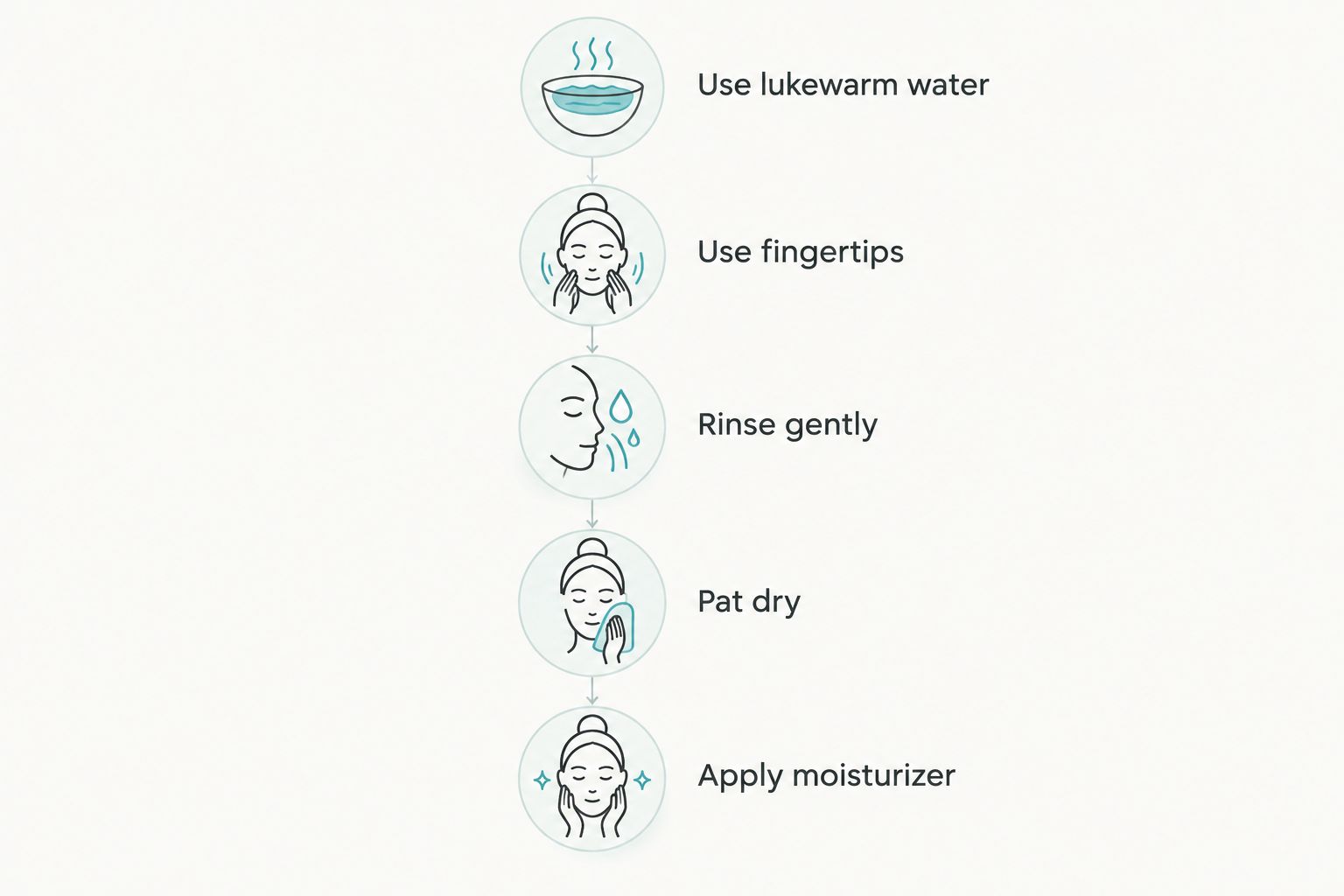
The American Academy of Dermatology’s established patient guidance supports gentle fingertip cleansing, lukewarm water, and avoiding scrubbing. Its general face-washing advice limits washing to twice daily and after heavy sweating; eczema care requires adjustment to your clinician’s instructions.
Use that guidance as a boundary, not a reason to add another wash when your skin is already irritated.
Use lukewarm water
Wet your face with lukewarm water rather than hot water. If you wash in the shower, keep the shower short: the Academy recommends 5–10 minutes for dry skin.
Longer exposure and hotter water are not better cleansing. Keep the wash focused on removing what needs removing.
Use fingertips
Spread the cleanser gently with your fingertips, following its directions. Avoid cleansing brushes, rough washcloths, and facial scrubs on eczema-prone areas.
Do not chase a squeaky finish. Rubbing harder when your skin feels dry adds friction rather than hydration.
Rinse gently
Rinse as directed and avoid leaving cleanser around the hairline or facial folds. If the product causes persistent burning, stop using it and seek advice rather than repeating the exposure.
Pat dry
Use a soft, clean towel and pat instead of rubbing. Leave your skin slightly damp for the next step.
Apply moisturizer
Apply a suitable fragrance-free moisturizer while your skin is still damp. Follow your clinician’s directions for the timing and placement of prescribed eczema medication.
Facial eczema changes the decision
Dryness alone does not confirm eczema. Persistent itching, recurring inflamed patches, or a facial rash deserves medical assessment, especially when the eyelids are involved.
For your 2026 routine, separate everyday cleansing from flare treatment. Keep a tolerated cleanser consistent while your clinician addresses inflammation; introducing several new products together makes it harder to identify an irritant.
Also separate body care from facial care. A body wash containing colloidal oatmeal is not automatically suitable for your face, and an ingredient’s general role does not establish how every finished formula should be used.
Seek prompt medical care for rapidly worsening redness, warmth, pain, pus, or a rash accompanied by fever. Do not try to manage suspected infection by washing more aggressively.
Which facial cleanser should you choose?
Rejûvaskin Facial Cleanser is the default choice in this guide for dry skin seeking a dedicated hydrating facial wash. Choose a fragrance-free cream cleanser instead if richer texture is your priority, or a fragrance-free cleansing lotion if low lather matters most.
Prefer a bar? Investigate a fragrance-free syndet rather than ordinary deodorant soap. For active facial eczema, your clinician’s advice takes priority over the ranking.
If your existing gentle cleanser works without persistent discomfort, there is no need to replace it simply because a different format appears on a list. Consistent, tolerated care is the goal.
FAQ
What is the best facial cleanser for dry skin in 2026?
A gentle, hydrating facial cleanser is the best starting point for dry skin. Choose a formula that fits your sensitivities and does not leave persistent tightness, burning, or increased itching.
What should I look for in a cleanser if I have facial eczema?
Look for a gentle, fragrance-free facial cleanser and follow your clinician’s eczema plan. Avoid scrubs, deodorant soaps, and products containing ingredients you know trigger a reaction.
Is a cream cleanser better than a foaming cleanser for dry skin?
Cream texture alone does not make a cleanser better for dry skin. The complete formula and your skin’s response matter more than the amount of foam.
How often should I wash a dry face?
Keep cleansing gentle and avoid unnecessary washing. The American Academy of Dermatology’s general guidance limits face washing to twice daily and after heavy sweating; follow individualized advice for active eczema.
Can I use an eczema body wash on my face?
Use a body wash on your face only when its directions permit facial use and it suits your skin. Keep it away from your eyes and ask your clinician about use during a facial eczema flare.
Does unscented mean fragrance-free?
No, unscented does not necessarily mean fragrance-free. Fragrance ingredients can be used to mask odors, so look for fragrance-free labeling and review the ingredient list.
Should I moisturize after using a hydrating cleanser?
Yes, apply a suitable moisturizer after cleansing while your skin is still damp. A rinse-off hydrating cleanser does not replace leave-on moisture or prescribed eczema treatment.
One last thing
Before replacing your cleanser, remove the washcloth or cleansing brush from your routine. Friction is a separate source of irritation, and a gentle formula cannot compensate for scrubbing eczema-prone skin.
Change the technique before adding more products. If discomfort persists, stop the suspected irritant and get medical advice.
Related guides
- What causes eczema? Guidance for parents and patients
- Colloidal oatmeal for eczema
- Eczema myths versus facts
Leave a comment