





Topical silicone scar gel is generally considered low risk during pregnancy when used on fully healed, intact skin, but your obstetric clinician should review the exact formula before you start. That does not make every silicone-containing scar cream pregnancy-safe: added ingredients and irritated or eczema-affected skin need separate consideration. This 2026 guide explains how to separate scar care from eczema care and choose the right next step.
- Is silicone scar gel safe during pregnancy? Generally low risk on healed skin; confirm the full formula with your clinician.
- Rejûvaskin silicone scar care targets healed scars, not active eczema or open wounds.
- Keep scar gel off cracked, weeping, or inflamed eczema patches.
- Check every ingredient; a silicone gel, scar cream, and silicone sheet are not interchangeable.
Is it safe to use silicone scar gel while pregnant?
Silicone scar gel is generally a low-risk topical option on healed skin, not a blanket pregnancy clearance for every scar product. Medical-grade silicone works at the skin surface, forming a protective film rather than treating scars through a systemic drug effect. Your clinician still needs to consider the complete formulation and where you intend to apply it.
If you also have eczema, assess the skin before the scar. A closed scar surrounded by comfortable skin is different from a scratched, inflamed patch; the guide to moisturizing eczema-prone facial skin addresses that separate barrier-care need.
Use this sequence before starting scar care during pregnancy:
- Confirm the concern. Identify whether you are treating a healed scar, active eczema, stretch marks, or an unhealed wound.
- Check the skin. Do not put scar gel on open, cracked, bleeding, or weeping areas.
- Review the label. Show your obstetric clinician or pharmacist the full ingredient list, warnings, and directions.
- Confirm the plan. Ask whether the product, treatment area, and application routine fit your pregnancy and skin condition.
A previous pregnancy, an earlier prescription, or a familiar brand name does not replace that check. Bring the actual package rather than asking about silicone in the abstract.
Why this matters
Pregnancy skincare questions often combine two different concerns: effects on the pregnancy and effects on your skin. A topical product can have low expected systemic exposure yet still sting or trigger a local reaction. Pregnancy compatibility and eczema tolerance are separate questions.
That distinction matters when itching occurs around an old surgical scar. Silicone scar gel addresses scar management; it does not replace treatment for an eczema flare. Adding more scar product to itchy skin is not a substitute for identifying the cause.
For your 2026 skincare review, group products by purpose before asking your clinician to approve them. Keep scar products, moisturizers, eczema medicines, and cosmetic treatments in separate categories so each gets the right assessment.
Silicone gel, silicone sheets, or scar cream: what changes?
The format affects application and skin tolerance. It does not, by itself, establish pregnancy safety.
| Option | Best for | Practical benefit | Limitation |
|---|---|---|---|
| RejûvaSil Silicone Scar Gel | Clinician-approved care of healed postoperative or facial scars | A medical-grade silicone gel designed for non-invasive scar management | The complete formula still needs review; it is not an eczema treatment |
| Scar Fx Silicone Sheet | Clinician-approved care of a healed scar suited to a sheet | Provides silicone contact over the covered scar | Covered skin needs checking for irritation; do not place it over active eczema |
| Silicone-containing scar cream | People whose clinician approves that specific cream | Offers a cream format for scar care | Other ingredients prevent assuming it has the same suitability as silicone gel |
Rejûvaskin silicone scar care is best suited to people managing healed scars, not active eczema. That is a distinction about intended use, not a pregnancy-specific safety endorsement.
Choose the formula and format your clinician approves, not whichever product sounds strongest. A gel is not automatically safer than a sheet, and a cream is not automatically gentler because it feels moisturizing.
Silicone scar gel: check the entire formula
The word silicone identifies one part of a product. It does not tell you everything else in the tube.
Read the ingredient list for added actives and ingredients you already know irritate your skin. Do not combine a scar gel with a separate brightening or anti-aging treatment without reviewing both products. In particular, topical retinoids are generally avoided during pregnancy.
For eczema-prone skin, fragrance and personal contact allergies also matter. A pregnancy-compatible ingredient can still be unsuitable for your own skin.
Silicone sheets: check the covered skin
Silicone sheets remain in contact with the scar. Follow the specific product's cleaning and wear directions rather than borrowing a schedule from another sheet.
Check underneath for new redness, irritation, or soggy-looking skin. Stop using the sheet if the area becomes irritated, and ask your clinician how to proceed. Do not continue covering a rash simply to maintain a scar-care routine.
Why pregnancy scar-care advice varies
Your clinician's recommendation depends on more than the presence of silicone. These factors explain why advice for one person or product does not automatically apply to another:
- The full formula. A silicone gel and a multi-ingredient scar cream require separate ingredient reviews.
- Skin integrity. Fully healed skin is different from an incision, scratched eczema, or a weeping patch.
- Treatment location. A facial scar, abdominal scar, and skin fold create different practical application concerns.
- Skin sensitivity. Previous reactions and contact allergies help determine what your skin tolerates.
- Other treatments. Prescription eczema medicine, moisturizers, and cosmetic actives need a coordinated application plan.
- The diagnosis. A raised scar, eczema flare, infection, and pregnancy-related rash need different care.
The useful question in 2026 is not just whether silicone is safe. Ask: Is this exact product appropriate for this healed scar, on my skin, during my pregnancy? That wording gives your clinician something specific to assess.
What if you have eczema around the scar?
Treat active eczema as a separate problem before adding scar products to the affected area. Dryness, scratching, and inflammation can make the skin uncomfortable and disrupt its protective barrier. A scar product does not address every cause of itching.
If eczema overlaps the scar, ask your clinician where each treatment belongs. Do not mix prescription medicine into scar gel or place a silicone sheet over eczema medicine unless your clinician specifically directs that approach; covering a medicine can change its effects.
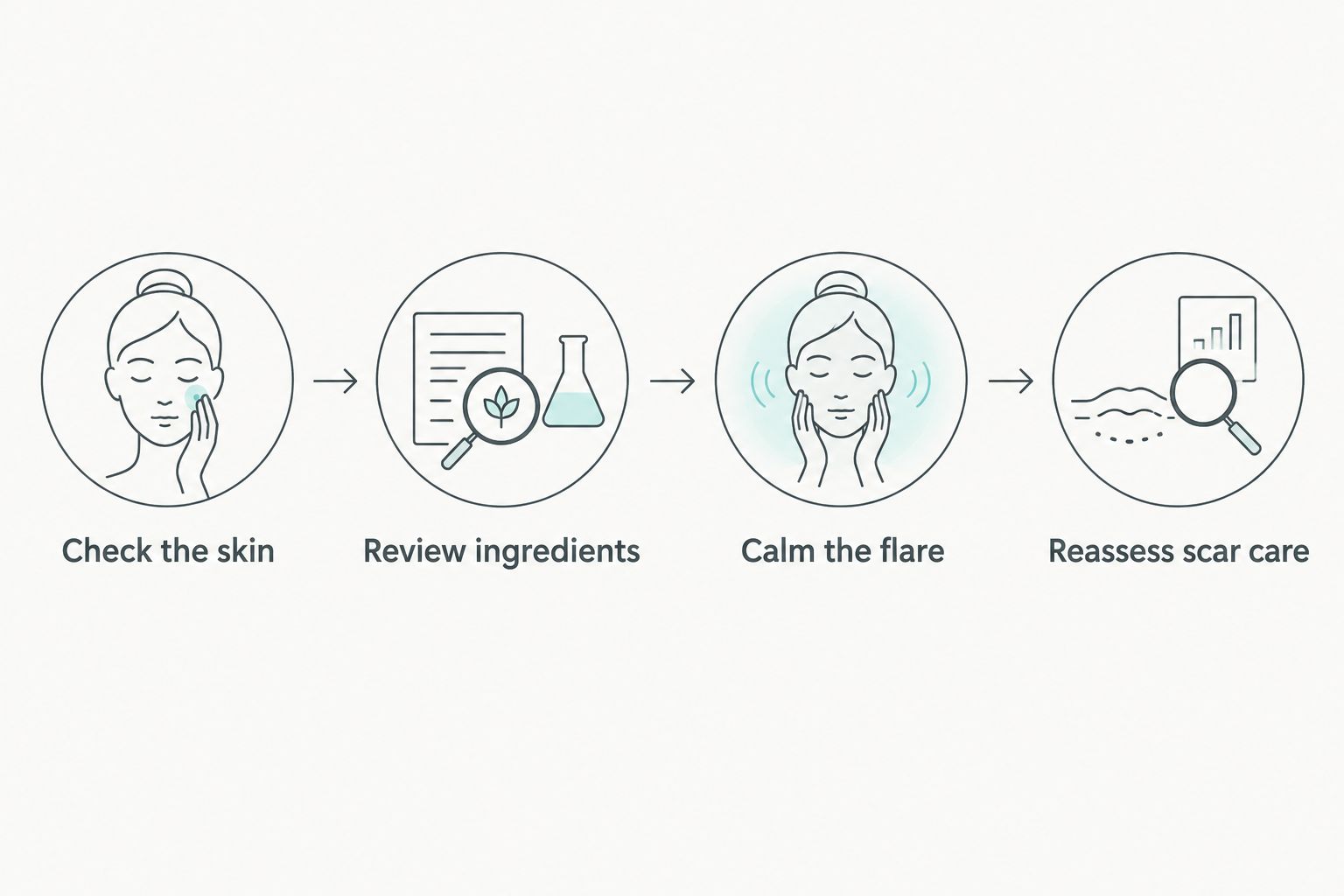
Use these priorities to organize the conversation:
- Check the skin: Look for cracks, weeping, crusting, or spreading redness.
- Review ingredients: Identify products that sting or have caused previous reactions.
- Calm the flare: Follow the pregnancy-appropriate eczema plan your clinician recommends.
- Reassess scar care: Restart only when the skin is suitable and the application plan is clear.
A simple cleansing and moisturizing routine supports eczema-prone skin, but it does not replace prescribed treatment. The American Academy of Dermatology's eczema self-care guidance recommends short, lukewarm baths or showers, generally 5–10 minutes, followed by moisturizer while the skin remains damp. Avoid scrubbing the scar or surrounding rash.
Choose fragrance-free products rather than assuming unscented means fragrance-free. Pat dry instead of rubbing, and stop a new product if it causes persistent burning or a worsening rash.
Can you use silicone gel on an old C-section scar while pregnant?
Silicone gel is generally a low-risk option for an old, fully healed C-section scar when your obstetric clinician approves the specific product. The incision must be closed, without open areas, drainage, or active inflammation.
An old scar can feel different as your abdomen changes, but discomfort does not automatically mean you need more scar gel. Ask your maternity team about persistent pain, a new lump, broken skin, or other changes rather than treating them as cosmetic concerns.
If eczema affects the lower abdomen, examine the whole application area. A healed scar does not make the surrounding inflamed skin suitable for scar gel or a sheet.
Can you use silicone scar gel on pregnancy stretch marks?
Silicone scar gel is not automatically an appropriate treatment for pregnancy stretch marks. Stretch marks and raised postoperative scars are different concerns, so a product intended for one should not be assumed effective for the other.
If your main concern is itchy, stretching skin, start by discussing moisturization and the cause of the itching. Avoid turning a small-area scar product into an all-over abdominal treatment without your clinician's approval.
For a 2026 pregnancy routine, keep the goal explicit: comfort, eczema control, or management of an existing healed scar. Those goals do not require the same product.
What should you do if scar gel causes itching or redness?
Stop using the scar gel if it causes new itching, burning, or redness, and gently remove it according to the product directions. Do not apply another new active product to counter the reaction.
Contact your clinician if symptoms persist, spread, or involve blistering or broken skin. Increasing warmth, pain, swelling, pus, or fever needs prompt medical assessment rather than a different scar product.
Pregnancy-related itching also deserves attention when it is severe, widespread, worse at night, or affects the palms or soles, particularly without an obvious rash. Contact your maternity team promptly; not every pregnancy itch is eczema or a product reaction.
How to prepare for a useful clinician review
Bring the tube or clear photographs of every label panel. Your clinician needs the ingredients and directions, not just the front-of-package claim.
Explain where you want to apply it, whether the scar is completely healed, and whether eczema affects the same area. Include products you already use there, particularly prescription medicines and retinoids.
Ask for an application plan you can follow without improvising:
- Which product belongs directly on the scar?
- Which product belongs on surrounding eczema-prone skin?
- Should any products be kept apart or stopped?
- What reaction means you should stop and call?
If sun reaches the healed scar, discuss sun protection too. The American Academy of Dermatology recommends broad-spectrum sunscreen with SPF 30 or higher; clothing and shade also help reduce exposure. Choose a sunscreen your skin tolerates rather than assuming every mineral formula suits eczema.
FAQ
Is silicone scar gel safe during pregnancy?
Topical silicone scar gel is generally considered low risk on fully healed, intact skin during pregnancy. Ask your obstetric clinician to review the exact formula, especially if it contains additional actives or you have eczema.
Can silicone scar gel harm my baby?
Silicone scar gel used on intact skin is expected to have low systemic exposure, but that is not a guarantee for every finished product. Your clinician should assess the full formula and intended use before you start.
Can I put silicone scar gel over eczema?
Do not put silicone scar gel over active, cracked, or weeping eczema. Ask your clinician to treat the flare and explain when scar care can resume.
Are silicone sheets safer than scar gel during pregnancy?
Silicone sheets are not automatically safer than scar gel during pregnancy. The exact product, skin condition, and your clinician's advice determine suitability; sheets also require checking the covered skin for irritation.
Can I keep using scar gel if I used it before getting pregnant?
Review your scar gel with your obstetric clinician even if you tolerated it before pregnancy. Previous use does not establish that every ingredient fits your pregnancy skincare plan.
Should I stop my prescribed eczema cream during pregnancy?
Do not stop or change prescribed eczema treatment without speaking to your prescriber. Ask for a pregnancy-appropriate plan and separate instructions for any scar product used nearby.
Does silicone scar gel prevent stretch marks during pregnancy?
Do not assume silicone scar gel prevents pregnancy stretch marks. A product intended for healed surgical scars does not automatically have evidence for preventing stretch marks.
One last thing
The scar and the surrounding skin can need different care on the same day. You do not have to choose one product to solve both problems.
Before starting Rejûvaskin scar care during pregnancy in 2026, photograph the healed scar and any nearby eczema, then bring those images and the product label to your clinician. A clear boundary between scar treatment and eczema treatment makes the routine easier to follow—and easier to change if irritation develops.
Related guides
Leave a comment