





Silicone scar gel works gradually over weeks to months, not overnight; visible improvement depends on the scar, consistent use, and your skin’s tolerance. It does not erase scars or treat active eczema, so eczema-prone skin needs a separate plan for inflammation, itching, and barrier care.
- How long does silicone scar gel take to work? Expect gradual changes over weeks to months, not immediate scar removal.
- Rejûvaskin offers silicone scar care for healed scars; active eczema needs separate treatment.
- Start silicone only after the wound closes and your treating clinician clears scar care.
- Track scar height, firmness, and discomfort separately from eczema-related itching and discoloration.
How long does it take to see results from silicone scar gel?
Expect a gradual response rather than a fixed finish date. A scar can become softer or more comfortable before its appearance changes noticeably, and no single timeline applies to every surgical scar, injury, or skin type.
RejûvaSil Silicone Scar Gel is a medical-grade silicone gel intended for scar management, including post-operative and facial scars. That purpose is different from controlling an eczema flare. If the skin around your scar is inflamed, weeping, or repeatedly scratched open, ask your clinician how to manage both concerns before starting.
Use this practical framework for scar care in 2026:
| Stage | What to assess | What it means |
|---|---|---|
| Before starting | Is the wound fully closed, without drainage or open areas? | Wound care comes before silicone scar care. |
| Early use | Does the skin tolerate the product without a new rash? | Comfortable, consistent use matters more than applying extra gel. |
| Continued use | Is the scar changing in firmness, height, color, or discomfort? | Compare individual features rather than expecting complete disappearance. |
| Reassessment | Is the scar growing, worsening, or staying troublesome? | A clinician can assess whether silicone alone is appropriate. |
Judge progress by a trend, not by a single day’s appearance. Lighting, dryness, and scratching can make the same area look different without indicating a meaningful change in the scar.
Why this matters for eczema-prone skin
Eczema and scars can share symptoms, including itching and visible color changes. They do not require the same treatment. Silicone scar gel is not a substitute for prescribed eczema medication or regular moisturizer.
Repeated scratching can injure the skin, while eczema inflammation can leave flat darker or lighter patches. Those patches are not automatically raised scars, and a silicone product is not a general treatment for every mark left after a flare.
For eczema-prone skin in 2026, the first decision is therefore not which scar product to apply. It is whether you are treating a healed scar, active dermatitis, or lingering discoloration. A dermatologist can distinguish these when the answer is unclear.
Why silicone scar gel results vary
Silicone helps manage scars by forming a protective layer that supports hydration at the scar surface. It does not remove the underlying scar tissue. Published clinical guidance commonly includes silicone among noninvasive options for raised scars, but an individual result is not guaranteed.
These factors change how you should assess progress:
- Scar type: Raised hypertrophic scars and keloids differ from flat discoloration or indented scars. A diagnosis helps determine whether silicone fits the problem.
- Scar maturity: A newly healed scar is still changing naturally. An older, established scar needs different expectations.
- Consistent use: Follow the specific product’s directions. Irregular application makes it harder to assess whether the routine is helping.
- Skin tolerance: Burning, a new rash, or worsening eczema interrupts care and deserves attention rather than extra applications.
- Location and friction: Clothing, movement, and repeated rubbing affect comfort and how easily you maintain the routine.
- Ongoing inflammation: An active eczema flare or repeated scratching can obscure changes in the scar and create additional skin injury.
A scar that looks unchanged is not a reason to apply a thicker layer. Follow the label and ask your clinician about the next step instead of increasing treatment on your own.
Silicone gel or silicone sheets: which fits your routine?
Both formats deliver silicone scar care, but the practical trade-offs differ. Choose a format you can use correctly without aggravating nearby eczema; neither format treats the underlying dermatitis.
| Option | Best for | Main advantage | Limitation |
|---|---|---|---|
| RejûvaSil Silicone Scar Gel | Healed facial or post-operative scars when a spreadable format suits the site | Clear gel provides a noninvasive scar-care option | Requires application according to directions; it is not an eczema treatment |
| Scar Fx Silicone Sheet — 1.5 x 3 | A healed scar where a sheet can sit comfortably | Provides silicone in a physical sheet | Coverage can be uncomfortable on irritated skin; correct sizing and label-directed care matter |
Rejûvaskin silicone scar care is best for consumers managing healed scars, not active eczema. Neither gel nor sheeting guarantees complete scar removal, and neither replaces evaluation of a growing or painful scar.
Before choosing either format, check the current directions and discuss any history of reactions with your clinician. For eczema-prone skin, comfort is a treatment requirement, not a minor preference.


How to use scar gel without overlooking eczema
A simple routine makes changes easier to interpret. Your clinician’s instructions take priority, particularly after surgery or when eczema affects the treatment area.
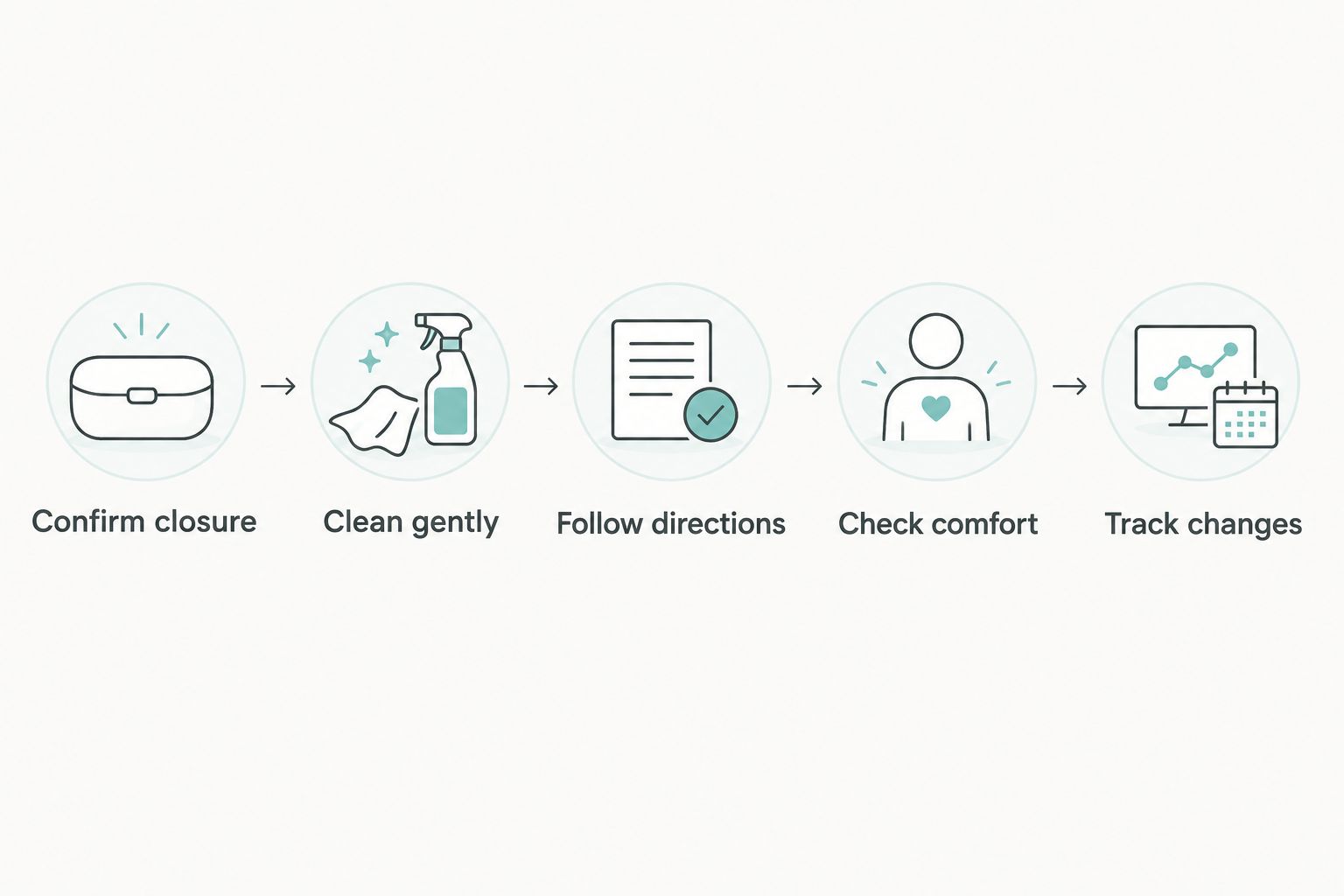
- Confirm closure. Start only on fully healed, intact skin after your treating clinician approves. Do not put silicone gel into an open incision, draining area, or scratched-open patch.
- Clean gently. Use lukewarm water and a mild cleanser appropriate for sensitive skin. Avoid scrubs, vigorous rubbing, and fragranced products that irritate your skin.
- Follow directions. Apply the amount and frequency stated on the product label. More gel does not establish a faster result.
- Check comfort. Watch for new burning, rash, or worsening itch. Stop a product that causes a reaction and seek advice before restarting.
- Track changes. Record the scar’s appearance and symptoms under similar conditions. Keep eczema symptoms separate from scar observations.
This sequence keeps scar care focused on intact skin. It also prevents a common mistake: treating every itchy area as a scar problem when the surrounding skin needs eczema care.
Keep eczema care separate from scar treatment
A gentle wash and regular moisturizing support eczema-prone skin, but they serve a different purpose from silicone scar gel. During bathing, use lukewarm rather than hot water and avoid scrubbing the scar or surrounding patches.
The American Academy of Dermatology’s eczema bathing guidance recommends short baths or showers of 5–10 minutes, followed promptly by moisturizer. Choose fragrance-free products; an unscented label does not necessarily mean a product contains no fragrance ingredients.
Rejûvaskin Eczema Body Wash contains 2% colloidal oatmeal and sodium hypochlorite and is formulated for dry, sensitive, eczema-prone skin. It is a cleanser, not a silicone scar treatment. Follow its directions and your clinician’s advice rather than treating its ingredients as instructions for a homemade preparation.
If you use prescribed eczema medication near a scar, ask how to separate or sequence the products. Do not assume moisturizer, medication, and silicone gel should all be layered together on the same area.
For your 2026 routine, keep the jobs clear: cleanse gently, moisturize eczema-prone skin, treat inflammation as directed, and use scar products only where appropriate.
What changes should you look for?
Compare the scar with itself rather than with another person’s result. Different injuries, body sites, and skin conditions make those comparisons unreliable.
Useful observations include:
- Height: Does a raised scar look flatter under similar lighting?
- Firmness: Does the area feel less firm without pressing or rubbing hard?
- Comfort: Is tightness or scar-related discomfort improving?
- Color: Is the scar changing independently of nearby eczema redness or pigmentation?
- Tolerance: Can you follow the routine without new irritation?
Take photographs from the same distance and angle, without filters. Add brief notes about eczema flares, missed applications, and changes in other products so a clinician can interpret the pattern.
Natural scar maturation also changes appearance. A photograph can document progress, but it cannot prove that silicone caused every change. Bring your record to a follow-up visit if you are uncertain about the response.
Does sun protection affect scar appearance?
Sun protection matters because ultraviolet exposure can make discoloration more noticeable. It does not make silicone gel work faster or turn a scar product into sunscreen.
The American Academy of Dermatology recommends broad-spectrum sunscreen with SPF 30 or higher, alongside protective clothing and shade. When outdoors, reapply sunscreen every 2 hours, and follow the label for swimming or sweating.
For eczema-prone skin, choose a sunscreen you tolerate and avoid applying it to broken skin unless a clinician directs otherwise. If sunscreen stings or triggers a rash, ask for help finding an appropriate option rather than abandoning sun protection.
In 2026, keep sun protection part of scar care without confusing its role: it helps protect exposed skin, while silicone addresses scar management.
Can silicone gel remove marks left by eczema?
Silicone gel is not a general treatment for marks left by eczema. Flat dark or light patches after inflammation are different from raised scar tissue, even when both remain visible after the skin feels better.
Control active eczema before adding treatments for leftover marks. Scrubbing, scratching, or introducing irritating products can restart inflammation and complicate the problem you are trying to improve.
What if silicone scar gel makes my skin itch?
Stop using silicone scar gel if it causes new or worsening itching, burning, or a rash. A clinician can help distinguish product irritation from an eczema flare, scar-related itch, or another skin problem.
Do not cover an unexplained reaction with more gel or a silicone sheet. Take note of when symptoms started and which products touched the area.
When should you contact a clinician?
Seek medical advice for a scar that becomes increasingly painful, hot, swollen, or draining, especially with spreading redness or fever. These symptoms require assessment rather than a longer trial of scar gel.
Also arrange a review if a raised scar keeps expanding, restricts movement, or remains very uncomfortable. Keloids and troublesome hypertrophic scars sometimes need treatments beyond silicone, and a clinician can explain the appropriate options.
FAQ
How long does silicone scar gel take to work?
Silicone scar gel produces gradual changes over weeks to months rather than an immediate result. The scar type, consistency of use, and skin tolerance affect what you see; follow the product directions and your clinician’s plan.
Can I use silicone scar gel during an eczema flare?
Do not start silicone scar gel on actively inflamed, broken, or weeping eczema without clinical advice. Treat the flare and confirm that the skin is suitable for scar care first.
Will silicone scar gel remove dark marks from eczema?
Silicone scar gel is not a general treatment for flat dark marks left by eczema. A dermatologist can distinguish post-inflammatory pigmentation from raised scar tissue and recommend appropriate care.
Is silicone gel better than silicone sheets for sensitive skin?
Neither format is automatically better for every person with sensitive skin. Choose according to the healed scar’s location, product directions, and your skin’s response, and stop if irritation develops.
Can I put moisturizer underneath silicone scar gel?
Follow the silicone product’s directions rather than assuming moisturizer belongs underneath it. Ask your clinician how to arrange moisturizer and prescribed eczema treatment around the scar-care routine.
Should I keep using scar gel if nothing changes?
Review your technique and expectations with a clinician if the scar remains troublesome or shows no improvement. Do not increase the amount or frequency beyond the label to try to force a result.
Does using more silicone gel make a scar fade faster?
Using more silicone gel than directed does not establish a faster result. Correct application and skin tolerance are more useful goals than a thicker coating.
One last thing
Before judging a scar product, make sure you are measuring a scar rather than an eczema flare. Persistent itching, flat pigmentation, and raised scar tissue can coexist, but they need different decisions.
Your most useful next step in 2026 is a clear baseline: identify the healed scar, note nearby eczema, and agree with your clinician on what improvement should look like. That gives you a meaningful way to assess gradual change without chasing an unsupported deadline.
Related guides
- Choosing a moisturizer for eczema-prone facial skin
- Comparing eczema body washes
- Scar cream options for older, stubborn scars
Leave a comment