





Yes, mineral sunscreen is worth it for daily use if you want UV protection and prefer zinc oxide or titanium dioxide, particularly when other sunscreens sting your sensitive skin. The trade-offs are possible white cast, heavier texture, and irritation from other ingredients; mineral filters do not guarantee an eczema-friendly formula. Choose broad-spectrum SPF 30 or higher, and treat sunscreen as sun protection—not eczema treatment.
- Is mineral sunscreen worth it? Yes, when its texture and ingredients help you use enough consistently.
- The American Academy of Dermatology recommends broad-spectrum SPF 30 or higher, with water resistance.
- Eczema-prone skin needs a tolerable complete formula, not just a mineral label.
- Rejûvaskin Mineral Facial Sunscreen provides SPF 32 using zinc oxide; it does not replace eczema treatment.
Why this matters
When you have eczema, choosing sunscreen involves more than avoiding sunburn. You need a formula you can spread without excessive rubbing, tolerate on sensitive areas, and use alongside your moisturizer and prescribed treatment.
A sunscreen that feels uncomfortable is difficult to use consistently. For your 2026 routine, prioritize adequate protection and tolerability over claims that one filter category is always better. If your face already feels tight or flaky, review your moisturizer routine for eczema-prone facial skin rather than expecting sunscreen to handle every skin concern.
Is mineral sunscreen worth it for daily use?
Mineral sunscreen is worth using daily when you tolerate the formula and apply it as directed. It is not automatically more protective than a non-mineral sunscreen with comparable labeled protection. The practical difference is whether its finish, ingredients, and application fit your skin.
The American Academy of Dermatology's public sunscreen guidance recommends broad-spectrum protection, SPF 30 or higher, and water resistance. Its sensitive-skin guidance also identifies zinc oxide and titanium dioxide as useful ingredients to look for when sunscreen causes burning or stinging.
| Sunscreen option | Best for | Main advantage | Main limitation |
|---|---|---|---|
| Mineral sunscreen | People who prefer zinc oxide or titanium dioxide, including those who find these filters more tolerable | Offers UV protection through mineral filters | Some formulas leave white cast or feel thick |
| Non-mineral sunscreen | People who tolerate the formula and prefer its finish | Many formulas spread easily without mineral white cast | Some formulas sting sensitive skin or eyes |
| Hybrid sunscreen | People who tolerate a combination of mineral and non-mineral filters | Combines filter types in one formula | A mineral ingredient does not make the entire formula mineral-only |
These are category-level trade-offs, not promises about every bottle. Fragrance, preservatives, solvents, and texture also affect your experience. Read the complete label before choosing.
Mineral sunscreen for eczema-prone skin
Best for: people seeking mineral-filter sun protection alongside an established eczema-care plan. Zinc oxide or titanium dioxide is a reasonable starting point if another sunscreen burns, but eczema-prone skin still needs individual assessment.
The National Eczema Association's public sunscreen guidance emphasizes mineral filters and fragrance-free formulas for sensitive, eczema-prone skin. That guidance does not mean every mineral sunscreen suits every person with eczema. A reaction can involve an ingredient other than the UV filter.
Look for fragrance-free labeling rather than relying on terms such as natural, clean, or sensitive. Those descriptions do not tell you whether a formula contains your personal trigger. If you have diagnosed contact allergies, compare the ingredient list with your dermatologist's avoidance list.
During a flare, protect uncomfortable areas with shade and suitable clothing while asking your clinician which topical products to use. Do not rub sunscreen into open, weeping, or visibly infected skin without medical guidance. Increasing pain, warmth, drainage, or rapidly worsening symptoms need assessment—not a different sunscreen experiment.
Mineral sunscreen for daily facial use
Best for: people who prefer mineral filters and find a facial formula comfortable enough for regular application. Its value depends on how it wears at the amount needed for protection, not how it feels as a tiny test dot.
Try the sunscreen with your usual moisturizer before judging its finish. A formula that looks acceptable alone can pill when layered, while another spreads better once dry skin has been moisturized. Avoid mixing sunscreen into moisturizer; mixing changes the product rather than applying it as tested.
White cast deserves attention, especially on deeper skin tones. If a sunscreen leaves a finish you dislike, do not solve the problem by applying less. Choose a different formula or consider a tinted option whose shade works for you.
For daily use in 2026, the right sunscreen is one you can apply evenly and reapply when needed. Makeup compatibility matters, but a smooth makeup finish does not establish adequate UV protection.
Why mineral sunscreen's daily value varies
The same mineral sunscreen can work well for one person and poorly for another. These factors explain the difference:
- Complete formula: Fragrance and other ingredients matter alongside zinc oxide or titanium dioxide. A mineral label is not an allergy guarantee.
- Skin condition: Dry, inflamed, or cracked skin needs a different level of care from comfortable, intact skin. Persistent stinging warrants review.
- Visible finish: White cast and tint mismatch affect whether you are willing to apply enough. Check the finish in daylight.
- Texture and layering: A thick formula can be difficult to spread over flaky areas. Compatibility with moisturizer affects your routine.
- Exposure: A brief commute and outdoor exercise create different reapplication needs. Sweat and water also make label instructions important.
- Application habits: Missed areas and underapplication leave gaps regardless of filter type. A higher SPF does not correct uneven coverage.
Choose for the routine you actually follow. A sunscreen that works only when you skip your needed moisturizer is not a practical match for eczema-prone skin.
How to use mineral sunscreen without complicating eczema care
Keep your 2026 routine simple: gentle cleansing, appropriate moisturizing, prescribed treatment where directed, and sunscreen on exposed skin. Your clinician's instructions take priority when medication timing or a flare changes that sequence.
Check the label
Confirm broad-spectrum protection and SPF 30 or higher. Check water-resistance instructions if you swim or sweat; do not assume every facial sunscreen has that claim. Also check the expiration date and storage directions.
Test a small area
Try a new formula on a small area of intact skin before broad use, following any clinician instructions. A home spot test does not rule out allergy, and it does not replace formal patch testing when a dermatologist suspects contact dermatitis.
Moisturize first
Apply your usual tolerated moisturizer before sunscreen, allowing it to settle enough that the sunscreen spreads evenly. Follow prescribed medication instructions rather than inventing a new layering schedule. Avoid scrubbing away flakes to create a smoother surface.
Apply evenly
Cover exposed areas, including easily missed places such as the ears and neck. Follow the sunscreen's directions for amount and application before exposure. The American Academy of Dermatology advises applying sunscreen about 15 minutes before going outdoors.
Reapply outdoors
Reapply approximately every 2 hours while outdoors and after swimming or sweating, following the product label. Water resistance is not waterproofing. Toweling off also removes protection and calls for reapplication.
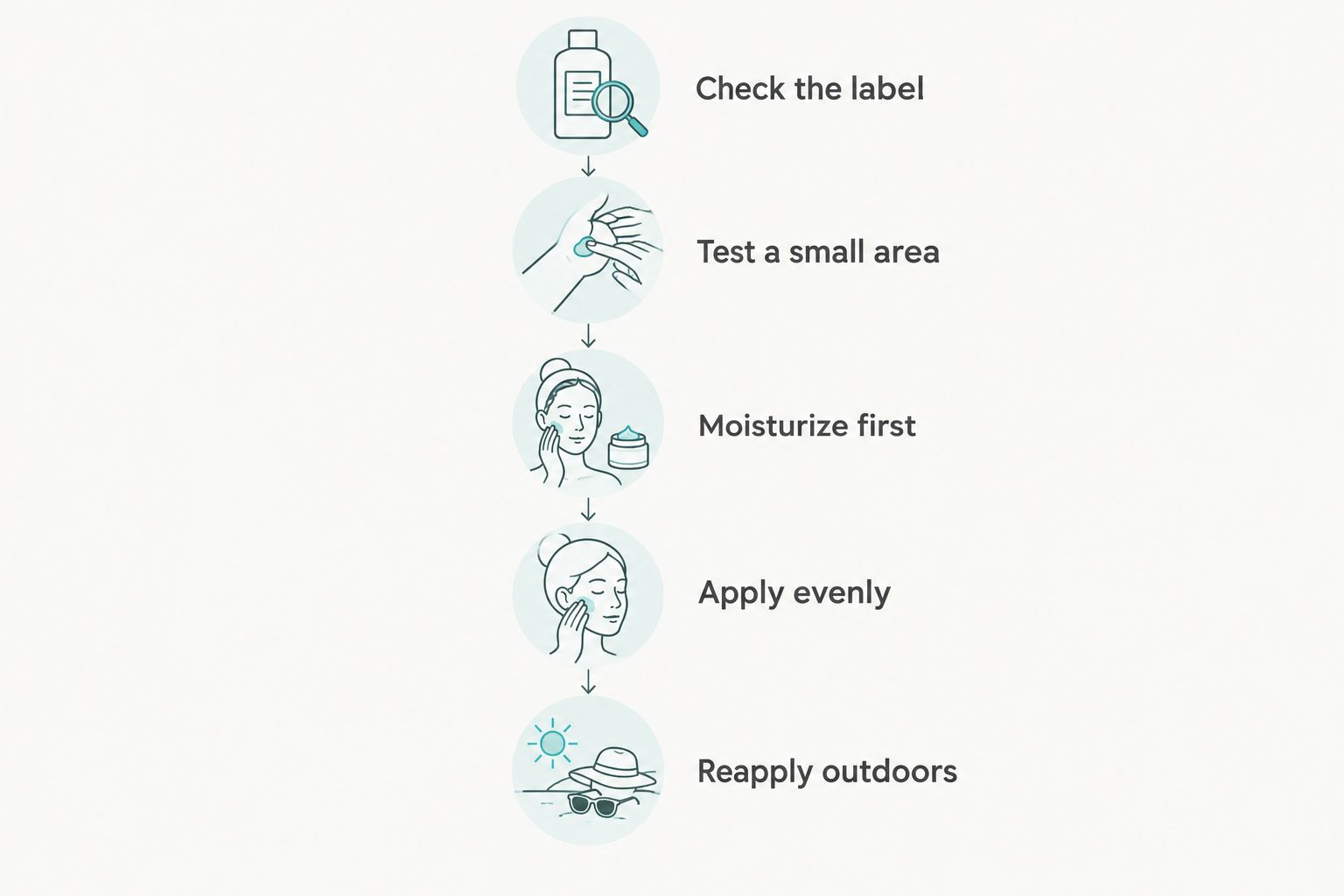
Sunscreen is only part of the plan. Shade, a broad-brimmed hat, and sun-protective clothing reduce exposure without adding another topical product to irritated skin. They remain important even when your sunscreen feels comfortable.
Where Rejûvaskin Mineral Facial Sunscreen fits
Rejûvaskin Mineral Facial Sunscreen is best for people seeking a zinc oxide facial sunscreen with SPF 32. Its product description identifies a 100% mineral formula that uses zinc oxide for protection against UVA and UVB rays.
The Mineral Facial Sunscreen fits the mineral-filter category discussed here. SPF 32 exceeds the SPF 30 threshold in the American Academy of Dermatology's general sunscreen recommendation, but you still need to follow the label for application and reapplication.
The limitation is straightforward: the stated product details do not establish that this formula treats eczema or suits every eczema trigger. Rejûvaskin Mineral Facial Sunscreen is sun protection, not a replacement for moisturizer or prescribed eczema medication. Check the complete ingredient list and water-resistance labeling against your needs before choosing it.
Is mineral sunscreen better than non-mineral sunscreen for eczema?
Mineral sunscreen is a reasonable first option for eczema-prone skin, but personal tolerance determines the better choice. Some people find zinc oxide or titanium dioxide less irritating; others comfortably use a non-mineral formula.
Do not discard a well-tolerated sunscreen solely because it uses a different filter category. If your current product provides appropriate protection without aggravating your skin, a category switch is not automatically an improvement. Conversely, recurring burning is a reason to reassess the formula rather than force continued use.
Do you need sunscreen when you are indoors?
Indoor sunscreen decisions depend on daylight exposure, especially time near windows. Window glass blocks much UVB but can allow UVA through, so sitting beside a sunny window differs from spending the day away from daylight.
For your 2026 routine, consider where you sit, whether you drive, and when you go outdoors. There is no need to treat every indoor setting as equivalent to a beach day. Follow individualized advice if you have a photosensitive condition or take medication that increases sun sensitivity.
Does a higher SPF mean you can reapply less often?
A higher SPF does not remove the need to reapply sunscreen. SPF describes protection under test conditions; it is not a promise that the product remains intact throughout your day.
Keep the outdoor reapplication interval of approximately every 2 hours, and follow the label after swimming or sweating. If repeated application irritates your eczema, discuss alternatives with your dermatologist and strengthen your use of shade and protective clothing.
FAQ
Is mineral sunscreen worth it if I have eczema?
Mineral sunscreen is worth considering if you have eczema and tolerate zinc oxide or titanium dioxide better than other filters. Choose a suitable complete formula; sunscreen protects against UV exposure but does not treat eczema.
What SPF should I use every day in 2026?
Choose broad-spectrum SPF 30 or higher, following the American Academy of Dermatology's general sunscreen guidance. Water resistance matters when swimming or sweating, and application must follow the label.
Can mineral sunscreen still irritate sensitive skin?
Yes, mineral sunscreen can still irritate sensitive skin because ingredients other than the mineral filters can cause a reaction. Stop using a product that causes persistent burning or worsening rash and seek clinical advice.
Should I apply moisturizer before mineral sunscreen?
Apply your tolerated moisturizer before sunscreen, unless your clinician or product instructions specify otherwise. Keep the products separate rather than mixing them together, and follow directions for any prescribed eczema medication.
Do I need to reapply mineral sunscreen every 2 hours?
Reapply mineral sunscreen approximately every 2 hours while outdoors, and follow the label after swimming or sweating. Mineral filters do not make the applied sunscreen resistant to rubbing, water, or removal.
Is Rejûvaskin Mineral Facial Sunscreen an eczema treatment?
Rejûvaskin Mineral Facial Sunscreen is a zinc oxide sunscreen with SPF 32, not an eczema treatment. Use it for sun protection alongside the eczema-care plan recommended by your clinician.
Can I use mineral sunscreen on my baby's eczema?
For babies younger than 6 months, prioritize shade and protective clothing and ask your pediatrician before using sunscreen. For older babies with eczema, choose an age-appropriate formula and discuss active or broken skin with the child's clinician.
One last thing
Do not use less sunscreen to make white cast disappear. That changes your protection, not just your appearance. If the recommended application leaves an unacceptable finish, choose a better-matched formula instead.
Before buying another sunscreen in 2026, identify what failed with the last one: burning, dryness, pilling, or visible residue. That specific problem is more useful than a blanket judgment about mineral filters. Keep eczema control and sun protection connected, but do not ask one product to do both jobs.
Leave a comment