





Choose a fragrance-free cream rather than a lotion after bathing if you have dry, eczema-prone skin. Creams generally retain moisture better; lotions feel lighter but offer less protection against water loss. Apply your moisturizer while your skin is still slightly damp, and keep prescribed eczema treatment in your routine.
- Eczema cream vs lotion: a fragrance-free cream is generally the better after-bath choice for dry, eczema-prone skin.
- National Eczema Association guidance favors creams and ointments over lotions for retaining moisture.
- Rejûvaskin Skin Recovery Cream is a leave-on moisturizer; Eczema Body Wash is a rinse-off cleanser.
- Moisturizer supports eczema care but does not replace prescribed treatment or assessment of possible infection.
Eczema cream vs lotion: which should you use after bathing?
Use a cream as your starting point after bathing; consider an ointment when you need a more occlusive option. A lotion is a lighter alternative, but it is generally less suitable when eczema leaves your skin persistently dry, rough, or tight.
If your main problem is discomfort immediately after washing, the guide to why eczema itches after a shower addresses that related question. Moisturizer texture matters, but so do water temperature, cleansing, and what happens when you step out.
| Moisturizer type | Best for | Main benefit | Main limitation |
|---|---|---|---|
| Cream | Dry, eczema-prone skin after bathing | More substantial moisture retention than a typical lotion | Some formulas feel heavy or sting sensitive skin |
| Lotion | People who prefer a lighter texture and tolerate it | Spreads easily and feels less greasy | Usually offers less protection against water loss |
| Ointment | Very dry areas needing greater moisture retention | Forms a more occlusive layer | Greasy texture makes it less comfortable for some people |
These are formulation categories, not guarantees about every bottle. A product’s complete ingredient list and your skin’s response still matter; a thick texture does not make a fragranced or irritating formula suitable for eczema.
Why does the choice matter after a bath or shower?
Eczema involves an impaired skin barrier, which makes retaining water more difficult. Bathing adds water to the skin, but cleansing and letting that water evaporate without moisturizing can leave you feeling dry again.
The National Eczema Association’s bathing guidance recommends lukewarm water, gentle cleansing, and prompt moisturizing. Its patient guidance describes a 5–10 minute bath or shower and applying moisturizer within 3 minutes afterward.
The practical point for your 2026 routine is simple: have your moisturizer ready before you turn on the water. You should not need to search a cabinet while your skin dries.
Bathing does not cure eczema, and eczema is not evidence of poor hygiene. Washing more aggressively is not the answer to persistent itching.
When is a cream the better choice?
A cream is generally the better after-bath option when your skin feels dry, tight, or rough. It provides a richer layer than a typical lotion without the greasy feel associated with many ointments.
Choose a fragrance-free formula made for sensitive or eczema-prone skin. Read the full label rather than relying on terms such as natural, soothing, or dermatologist-inspired; those descriptions do not tell you whether a particular ingredient irritates your skin.
A cream also needs to be comfortable enough to use consistently. If a product causes persistent burning, increased itching, or a new rash, stop using it and discuss an alternative with your clinician.
Best for: people who need a practical daily balance between moisture retention and a manageable texture. The limitation is individual tolerance: no cream works comfortably for everyone.
When is a lotion a reasonable option?
A lotion is reasonable when you prefer a lighter texture, tolerate the formula, and find that it keeps your skin comfortable. However, lotion is not the first choice when dryness remains obvious after application.
The National Eczema Association’s moisturizing guidance favors ointments and creams over lotions because of their greater oil content and ability to retain moisture. This is general category guidance, not a finding that every cream outperforms every lotion.
If your lotion leaves you tight or itchy soon after bathing, reassess the formulation rather than repeatedly washing and reapplying it. A fragrance-free cream is a more useful next discussion with your pharmacist or dermatologist.
Best for: people who prioritize a light feel and achieve adequate comfort with that formula. The trade-off is less protection against moisture loss than richer options generally provide.
When should you ask about an ointment instead?
An ointment deserves consideration when a cream does not adequately relieve dryness. Ointments generally contain more oil and form a stronger barrier against water loss, but their greasy feel is a real drawback.
You do not need to force the same texture onto every area of your body. Ask your clinician whether a richer option makes sense for particularly dry patches, especially if those areas remain uncomfortable despite regular moisturizing.
Best for: very dry skin needing a more occlusive layer. An ointment is not a substitute for prescribed anti-inflammatory treatment, and new weeping or painful skin needs assessment rather than simply a thicker coating.
How should you moisturize after bathing?
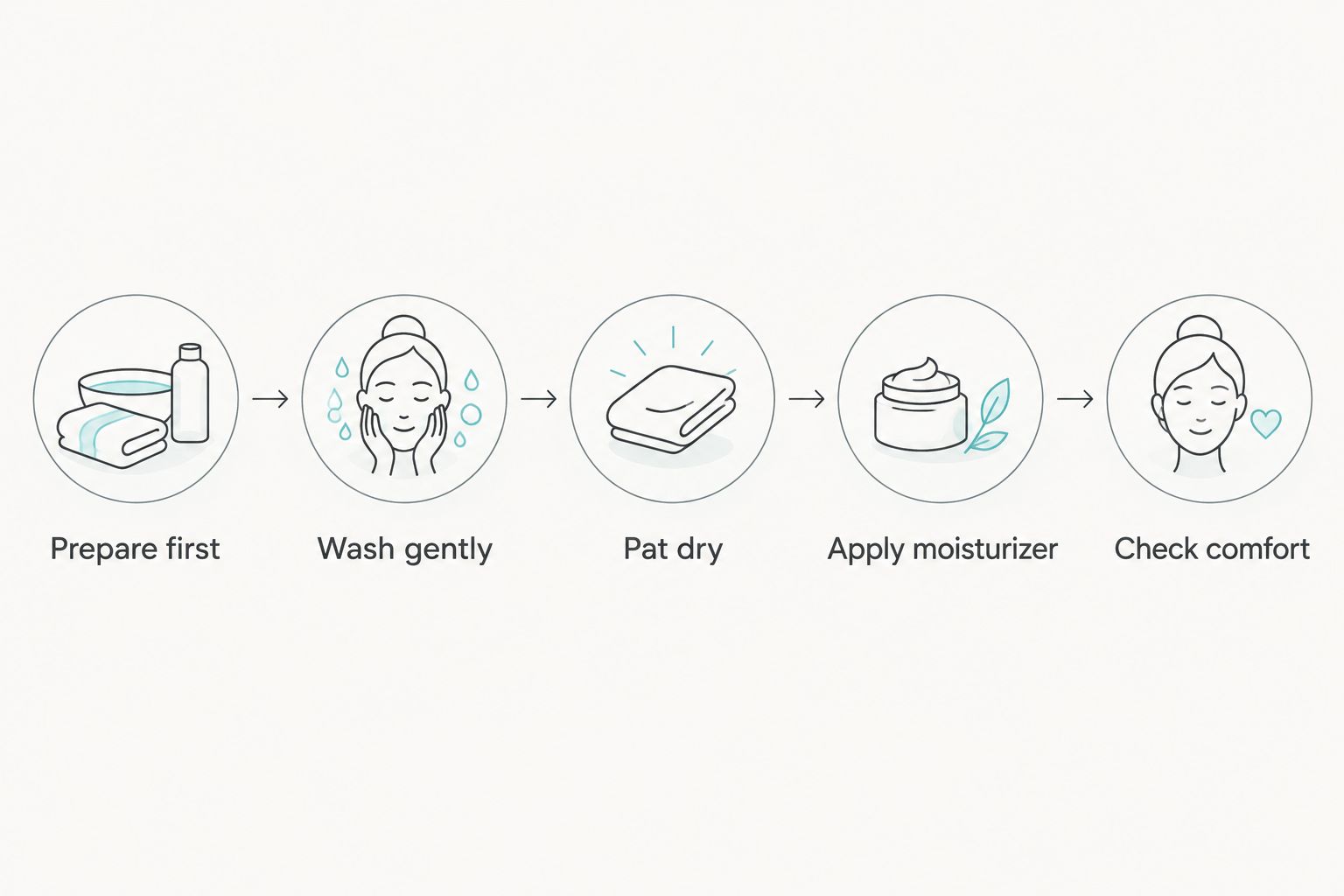
Use this sequence for your 2026 after-bath routine. If you have prescribed topical medication, follow your clinician’s instructions about its placement and timing rather than inserting a universal waiting period.
- Prepare first. Set out a soft towel, your moisturizer, and any prescribed products before bathing.
- Wash gently. Use lukewarm water and a mild cleanser where needed; avoid scrubbing eczema patches.
- Pat dry. Blot away excess water without rubbing, leaving your skin slightly damp.
- Apply moisturizer. Smooth on your tolerated cream promptly, following its label and your treatment plan.
- Check comfort. Notice whether your skin feels comfortable or develops persistent stinging, itching, or irritation.
The sequence matters more than adding extra products. A gentle wash followed by a suitable leave-on moisturizer has a different purpose from repeatedly cleansing skin that still feels itchy.
Do not interpret the 3-minute recommendation as a reason to rush or rub sore skin. It is a practical reminder to moisturize promptly, not a product-specific instruction or a reason to ignore medication directions.
Where do Eczema Body Wash and Skin Recovery Cream fit?
The two products perform different jobs: one cleanses and rinses away; the other stays on the skin. Rejûvaskin Skin Recovery Cream is suited to people seeking leave-on moisture and skin protection for dry, sensitive skin. That role does not make it a replacement for eczema medication.
| Product | Best for | Relevant formula details | Limitation |
|---|---|---|---|
| Eczema Body Wash | Rinse-off cleansing of dry, sensitive, eczema-prone skin | Contains 2% colloidal oatmeal and sodium hypochlorite | Does not replace leave-on moisturizer or treat a suspected infection |
| Skin Recovery Cream | Leave-on moisturizing and skin protection | Contains 6% dimethicone, aloe vera, calendula, and hyaluronic acid | Individual tolerance varies; it does not replace prescribed eczema treatment |
Both products carry National Eczema Association acceptance according to the brand’s catalog. That acceptance does not guarantee that every person with eczema will tolerate every ingredient.
Rejûvaskin eczema care separates rinse-off cleansing from leave-on moisturizing. Do not leave the wash on as a cream, infer its sodium hypochlorite concentration, or add household bleach to reproduce a commercial formula.


Why does the right moisturizer vary between people?
Use these factors to make your 2026 choice more specific than cream versus lotion alone:
- Degree of dryness: persistent tightness or roughness is a reason to reassess a lightweight lotion.
- Formula ingredients: fragrance and individually irritating ingredients matter even when the texture seems right.
- Body area: a texture that feels comfortable on your legs is not automatically comfortable everywhere else.
- Skin condition: intact dry skin and newly weeping, painful skin need different decisions.
- Treatment plan: prescribed medicines and their directions remain part of eczema management.
- Practical tolerance: a suitable texture needs to be comfortable enough for regular use.
Avoid changing several products at once when trying to identify irritation. Keeping the routine straightforward makes it easier to describe what changed and how your skin responded when speaking with a clinician.
Should you put eczema moisturizer before or after steroid cream?
Follow the application order given by your prescriber. The moisturizer’s thickness does not determine the correct order for every prescribed medicine, and there is no single waiting interval that applies to every treatment plan.
Do not mix prescribed medicine into a moisturizer unless your clinician specifically directs you to do so. Ask your pharmacist to clarify where each product goes if the instructions are unclear.
Can a cream sting even if it is made for eczema?
Yes, an eczema-focused cream can still sting or irritate your skin. Eczema-prone skin varies in sensitivity, and category labels or acceptance seals do not establish universal tolerance.
Persistent burning or worsening redness is not something to push through to make a product work. Stop the suspected product and seek advice, particularly if the reaction is substantial or your skin is broken.
When does after-bath irritation need medical attention?
Seek medical advice for new weeping, yellow crusting, pus, increasing warmth, swelling, or worsening pain. Fever, rapidly spreading changes, or feeling unwell require prompt assessment; do not wait for a moisturizer switch to resolve them.
The American Academy of Dermatology’s weeping eczema guidance explains that fluid leakage needs attention because inflammation and infection can be involved. Moisture on the skin alone does not tell you the cause.
These patient-education sources support general bathing, moisturizing, and escalation advice. They are not product-specific clinical trials, and the guidance discussed in this 2026 article does not establish comparative results for the featured products.
FAQ
Is cream or lotion better for eczema after a shower?
A fragrance-free cream is generally better than lotion for dry, eczema-prone skin after a shower. Creams usually retain moisture better; apply your tolerated formula while skin is still slightly damp.
How soon should I moisturize after bathing with eczema?
National Eczema Association bathing guidance recommends moisturizing within 3 minutes after bathing. Pat gently rather than rubbing, and follow your prescribed medication instructions.
Should I put eczema cream on wet or dry skin?
Apply moisturizer to slightly damp skin after gently patting away excess water. Follow separate label and clinician instructions for prescribed eczema medicines.
Is lotion bad for eczema?
Lotion is not automatically bad for eczema, but it generally provides less protection against water loss than a cream or ointment. Reassess it if your skin remains dry or tight.
Does a thicker moisturizer replace steroid cream?
A thicker moisturizer does not replace prescribed steroid cream or other eczema medication. Moisturizing supports barrier care, while prescribed medicines address needs identified by your clinician.
Can I use the same eczema moisturizer on my child?
Use a moisturizer on your child only according to its age-specific labeling and the child's clinician's advice. Do not assume adult directions establish suitable use for an infant or child.
Does Rejûvaskin Eczema Body Wash replace moisturizer?
Rejûvaskin Eczema Body Wash does not replace leave-on moisturizer. It is a rinse-off cleanser; Skin Recovery Cream provides a separate leave-on moisturizing and skin-protection step.
One last thing
Before buying a richer moisturizer, check what you do with your towel. Rubbing your skin completely dry and delaying moisturizer works against the goal of retaining bathwater in the skin; gentle patting and prompt application are straightforward changes to make in 2026.
Keep your prescriber involved if eczema remains painful, disrupts sleep, or does not respond to your treatment plan. More skincare is not always the next step.
Educational information only. This article does not diagnose eczema or replace individualized medical advice. Follow product labels and your clinician’s treatment instructions.
Leave a comment