





Best overall for immediate scar camouflage: high-coverage concealer. Best for correcting visible discoloration: color corrector; best for clear, longer-term care of appropriate healed scars: RejûvaSil Silicone Scar Gel—this 2026 guide separates cosmetic coverage from scar management, with specific precautions for eczema-prone skin.
- The best scar camouflage products conceal color; they do not erase raised or indented scar texture.
- Choose high-coverage concealer for immediate coverage on fully healed skin, not an active eczema flare.
- RejûvaSil Silicone Scar Gel supports scar management, not tinted camouflage or immediate color correction.
- Eczema-related dark marks are not always scars; identify the concern before choosing treatment.
Why this matters
A visible mark needs the right approach. Concealer changes what you see immediately; silicone scar care addresses an appropriate healed scar over time. Neither treats the underlying inflammation of active eczema.
If you have eczema-prone skin, first distinguish a scar from post-inflammatory discoloration. Flat darker or lighter patches after a flare do not necessarily represent permanent scarring. Raised tissue, an indentation, and a flat color change are different concerns.
Start with the background in what causes eczema if recurrent itching and irritation are part of the picture. Persistent scratching and inflamed skin need attention before cosmetic coverage.
Rejûvaskin silicone scar care is best for people managing appropriate healed scars, not people seeking immediate tinted coverage. That distinction drives this 2026 ranking: the best choice depends on whether you want to conceal color today or manage a scar's appearance over time.
What makes the best scar camouflage products?
Choose by purpose and skin tolerance, not by a promise to make every mark disappear.
- Coverage purpose: A pigmented cosmetic conceals color immediately. A clear scar gel does not.
- Scar texture: Makeup reduces visible color contrast but cannot flatten raised tissue or fill an indentation permanently.
- Skin condition: Fully healed, intact skin is different from cracked, weeping, infected, or actively inflamed skin.
- Ingredient tolerance: Fragrance-free labeling matters for eczema-prone skin. Unscented does not necessarily mean fragrance-free.
- Placement and routine: Facial contours, clothing contact, and movement affect whether makeup, gel, or a sheet is practical.
- Removal: A product that requires repeated rubbing to remove is a poor fit for easily irritated skin.
No single formulation wins every category. In particular, do not assume that a product intended for scars is also suitable for an eczema flare simply because both concerns involve sensitive skin.
Scar camouflage options at a glance
The 2026 comparison below ranks immediate coverage first, then separates scar-management options by their distinct uses. The silicone products are not substitutes for concealer.
| Rank and option | Best for | Standout feature | Key limitation |
|---|---|---|---|
| 1. High-coverage concealer | Immediate coverage of a healed scar's color | Pigment reduces visible contrast | Does not remove scar texture |
| 2. Color corrector | Neutralizing discoloration beneath concealer | Targeted color adjustment | Usually needs a skin-tone layer over it |
| 3. RejûvaSil Silicone Scar Gel | Clear scar care on facial contours | Medical-grade silicone gel | Provides no tinted camouflage |
| 4. Scar Fx Silicone Sheet - 1.5" x 3" | Sheet-based care for a localized healed scar | Defined silicone-sheet format | The sheet itself remains visible |
| 5. Scar Esthetique Scar Cream | Scar care focused on discoloration | Silicone scar cream designed to soften and brighten scars | Does not provide immediate cosmetic coverage |
1. High-coverage concealer: best for immediate scar camouflage
High-coverage concealer deposits skin-tone pigment over a visible mark. It is the most direct option when your goal is to reduce color contrast for a photograph, workday, or event.
Choose a shade by checking the surrounding skin in natural light. Start with a small amount and build only where the scar remains visible; a thick layer can make surface differences more noticeable.
For eczema-prone skin, avoid testing unfamiliar makeup on an active patch. A small-area tolerance check on intact skin helps identify obvious irritation, but it does not guarantee that a product will never cause a reaction.
High-coverage concealer pros:
- Gives immediate cosmetic coverage.
- Allows targeted application rather than full-face makeup.
- Can be adjusted to match surrounding skin tone.
High-coverage concealer cons:
- Does not flatten raised scars or repair indentations.
- Application and removal can irritate sensitive skin.
Best for: Fully healed scars where color contrast is your main concern.
Verdict: Buy for immediate coverage; skip application over an active eczema flare or broken skin.
2. Color corrector: best for discoloration beneath concealer
Color corrector changes the appearance of an unwanted undertone before you apply skin-tone makeup. Green correctors counter visible redness; peach and orange tones are commonly used for some darker discoloration, with the choice depending on your skin tone and the mark.
Use a thin layer only where the color needs correction. Too much corrector creates a new color mismatch and requires more concealer to cover it.
Eczema-related redness is not automatically a cosmetic problem. If the area is itchy, hot, cracked, or worsening, address the inflammation rather than repeatedly layering makeup over it.
Color corrector pros:
- Targets a specific color mismatch.
- Works beneath your existing complexion makeup.
- Lets you treat a small area selectively.
Color corrector cons:
- Usually needs concealer or foundation over it.
- The wrong undertone can make a mark more noticeable.
Best for: Healed marks whose redness or darker tone remains visible through concealer alone.
Verdict: Buy when concealer needs color correction; skip if concealer alone gives the coverage you want.
3. RejûvaSil Silicone Scar Gel: best for clear care on facial contours
RejûvaSil Silicone Scar Gel is a medical-grade silicone gel designed for post-operative and facial scar management. It belongs in a scar-care routine, not in the same functional category as tinted makeup.
A clear gel format offers an alternative to a visible silicone sheet. Follow the product's application directions and your clinician's advice about when a surgical site is ready for scar care.
Silicone is used for raised scar management; do not expect a clear gel to conceal redness immediately or restore tissue lost in an indented acne scar. If eczema affects the same area, ask your dermatologist whether scar treatment should wait.
RejûvaSil Silicone Scar Gel pros:
- Provides medical-grade silicone in a gel format.
- Is designed for post-operative and facial scars.
- Offers clear application rather than a visible sheet.
RejûvaSil Silicone Scar Gel cons:
- Contains no skin-tone coverage for immediate camouflage.
- Requires an ongoing routine rather than a single cosmetic application.
Best for: Appropriate healed facial or post-operative scars when you prefer a clear gel format.
Verdict: Buy for scar management; skip as a replacement for concealer.
4. Scar Fx Silicone Sheet: best for localized sheet-based scar care
Scar Fx Silicone Sheet - 1.5" x 3" provides silicone sheeting for scar management. This size measures 1.5 inches by 3 inches; compare those dimensions with your scar and the application instructions rather than choosing by the product photo alone.
A silicone sheet is a physical covering, but it is not skin-tone camouflage. Its purpose is scar care, and the sheet can remain noticeable on exposed skin.
Do not place silicone sheeting over an active eczema patch, open wound, or suspected infection without medical direction. Stop using a sheet and seek advice if the covered skin becomes irritated.
Scar Fx Silicone Sheet pros:
- Provides silicone in a defined sheet format.
- Gives you a localized scar-care option.
- Has stated dimensions you can compare with the treatment area.
Scar Fx Silicone Sheet cons:
- Remains visible rather than blending with your skin tone.
- Requires suitable placement and skin tolerance.
Best for: A localized healed scar suited to silicone sheeting and the selected dimensions.
Verdict: Buy for a suitable scar-care routine; skip when invisible daytime coverage is the priority.
5. Scar Esthetique Scar Cream: best for scar discoloration care
Scar Esthetique Scar Cream is a silicone scar cream designed to soften and brighten scars. It is an option when scar appearance and discoloration—not immediate concealment—are the focus of your routine.
Do not treat every dark mark after eczema as a scar. Post-inflammatory pigmentation requires a different assessment, particularly if the area still itches or changes color with recurring flares.
A cream's purpose does not establish tolerance for every person with eczema. Review the ingredient list and ask your clinician about use on the specific area before introducing another leave-on product.
Scar Esthetique Scar Cream pros:
- Is formulated specifically for scar care.
- Combines a cream format with silicone.
- Targets softening and brightening of scars.
Scar Esthetique Scar Cream cons:
- Does not conceal a mark immediately like pigmented makeup.
- Is not a substitute for eczema treatment or diagnosis.
Best for: People seeking a scar cream focused on scar appearance and discoloration.
Verdict: Buy for the stated scar-care purpose; hold if you have not established whether the mark is a scar.
The Rejûvaskin scar-care options below serve different routines. Choose gel or sheeting by the scar's location, your clinician's guidance, and skin tolerance—not by an expectation of instant camouflage.


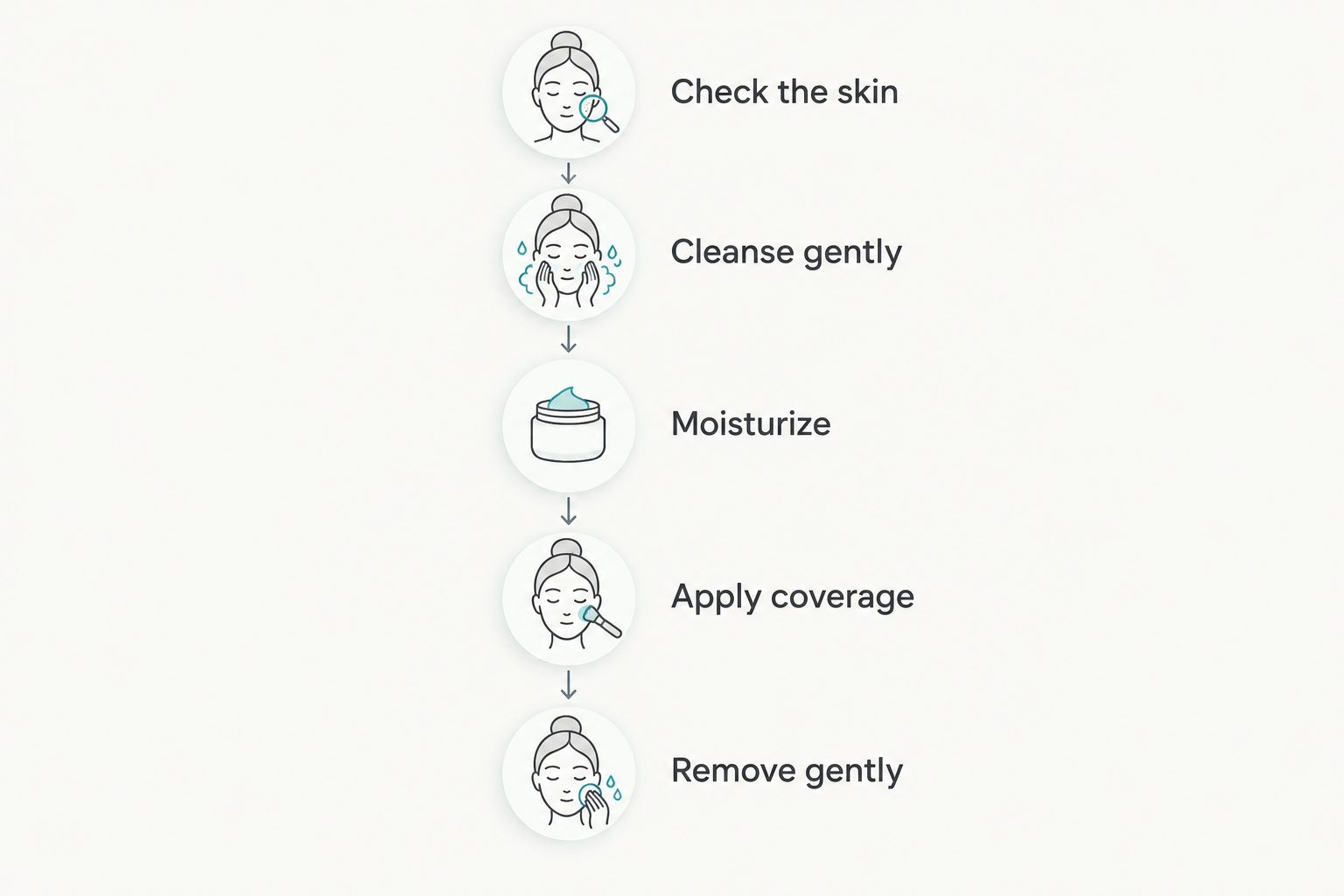
A skin-first routine for eczema-prone areas
Keep your 2026 routine simple enough to identify what your skin tolerates. Introducing makeup, scar cream, and a new cleanser together makes it harder to identify the cause if irritation develops.
Check the skin
Look for cracks, weeping, crusting, spreading redness, or increasing pain before applying anything. Pause cosmetic coverage on affected skin and seek medical advice for suspected infection or a worsening rash.
Cleanse gently
Use lukewarm water and a mild, fragrance-free cleanser suitable for sensitive skin. Avoid scrubs and repeated rubbing over a scar or an eczema-prone patch.
Moisturize
Use a moisturizer your skin already tolerates. Follow any prescribed eczema treatment plan; cosmetic coverage does not replace it, and medication order should follow your clinician's directions.
Apply coverage
Apply thin layers to intact, healed skin, using clean hands or clean tools. If you also use scar treatment, follow its directions rather than assuming every gel or cream works beneath makeup.
Remove gently
Remove coverage without scrubbing and stop if your skin starts burning or stinging. A finish that looks good but demands irritating removal is not a good daily choice.
How the options rank
This ranking prioritizes immediate color coverage, then separates the scar-care options by format and purpose. It does not present a head-to-head clinical trial or claim that one scar product treats every scar type.
High-coverage concealer takes the default position because camouflage means changing visible color now. Color corrector serves a narrower task; silicone gel, silicone sheets, and scar cream belong to longer-term care decisions.
For eczema-prone readers, skin condition comes before every ranking. No camouflage result justifies covering actively damaged skin or continuing a product that causes irritation.
Which scar camouflage option should you choose?
For immediate coverage in 2026, start with high-coverage concealer on fully healed skin. Add color corrector only if the underlying color still shows through; more layers are not automatically better.
For scar management, choose a suitable silicone format with clinical guidance. Rejûvaskin scar-care products address scar appearance, while pigmented cosmetics address temporary visibility. Keep those goals separate when deciding what to buy.
Sun protection also matters for exposed skin. The American Academy of Dermatology recommends broad-spectrum SPF 30 or higher and reapplication every 2 hours outdoors; follow the sunscreen label, and use protective clothing when appropriate.
FAQ
What's the best scar camouflage product for immediate coverage?
High-coverage concealer is the most direct choice for temporarily reducing a healed scar's color contrast. It does not remove raised or indented texture, and you should not apply it over open or actively inflamed skin.
Is silicone scar gel better than concealer?
Silicone scar gel and concealer serve different purposes. Silicone gel supports appropriate scar management, while concealer supplies temporary pigmented coverage.
Can I cover eczema marks with makeup?
You can consider makeup on intact skin after inflammation has settled, provided your skin tolerates it. Avoid cracked, weeping, or actively irritated areas, and remember that flat discoloration after eczema is not necessarily a scar.
Does green corrector hide a red scar?
Green corrector counteracts visible redness, but it usually needs a skin-tone cosmetic over it. It changes the appearance of color rather than treating the scar or the cause of redness.
Can I put makeup over RejûvaSil Silicone Scar Gel?
Follow the current RejûvaSil Silicone Scar Gel application instructions before combining it with makeup. Do not assume that layering directions are interchangeable across silicone gels, creams, and cosmetics.
Are silicone sheets invisible on a scar?
Silicone sheets are not skin-tone camouflage and can remain visible. Choose them for an appropriate scar-care routine rather than for an invisible cosmetic finish.
Can scar cream treat an active eczema flare?
A scar cream is not a substitute for treatment of an active eczema flare. Ask your clinician how to manage inflammation before adding scar products to the affected area.
One last thing
The mark you want to hide might not be a scar. If the area is flat and changed color after eczema, ask whether you are dealing with post-inflammatory pigmentation before buying a scar treatment.
For your 2026 routine, identify the concern first, protect the skin barrier, and choose coverage only when the skin is ready. The right product starts with the right diagnosis—not the strongest coverage claim.