





Scar cream for kitchen burn scars works by covering a fresh grease splash or stovetop burn in medical-grade silicone once the skin has closed, flattening the raised mark and fading discoloration while the tissue is still remodeling. Kitchen burns behave differently than surgical scars: they're irregular in shape, they usually land on hands and forearms that get constant sun exposure, and they're rarely deep enough for a surgeon to close with stitches, which means treatment starts later and depends entirely on what you do at home.
- Scar cream for kitchen burn scars only works once the burn is closed and dry — starting silicone on open skin does more harm than good.
- RejûvaSil Silicone Scar Gel suits irregular grease-splash marks; Scar Fx Silicone Sheets suit flat forearm burns; verdict: match the format to the burn's shape.
- Hands and forearms get more UV exposure than covered surgical scars, so sun protection matters as much as the scar cream itself in 2026.
- Consistent daily wear for two to three months, not two to three weeks, is what actually flattens a stovetop burn scar.
Why scar cream matters for kitchen burn scars
Grease splash burns are almost always partial-thickness burns — hot oil transfers heat fast and deep, deeper than most people expect from something the size of a coin. That depth is exactly what triggers raised, discolored scarring once the skin heals over.
Unlike a surgical incision, a kitchen burn isn't sutured, so the wound edges aren't held flat while they close. The skin heals on its own timeline, and whatever shape it settles into — raised, indented, darker than the surrounding skin — is largely locked in within the first few months unless something intervenes.
Hands and forearms also see daily sun exposure that a scar on the abdomen or chest never gets. Scar cream for kitchen burn scars has to do two jobs at once: flatten the tissue and manage pigment, because grease splash scars sit on the most sun-exposed skin on the body. International clinical guidance on silicone gel sheeting recommends daily wear for a minimum of two to three months to see meaningful flattening — a timeline most people treating a small kitchen burn underestimate.
How to treat a kitchen burn or grease splash scar
1. Confirm the burn has fully closed before you start
Silicone scar products are made for closed skin, not open wounds. Applying RejûvaSil Silicone Scar Gel or any silicone sheeting to a blister or weeping burn traps moisture against damaged tissue instead of protecting it.
- No open skin, no scabbing, no drainage
- The area is dry to the touch, not tacky
- New pink skin has formed over the burn site
- A burn that blistered has fully re-epithelialized
- Pain and swelling from the original injury have settled
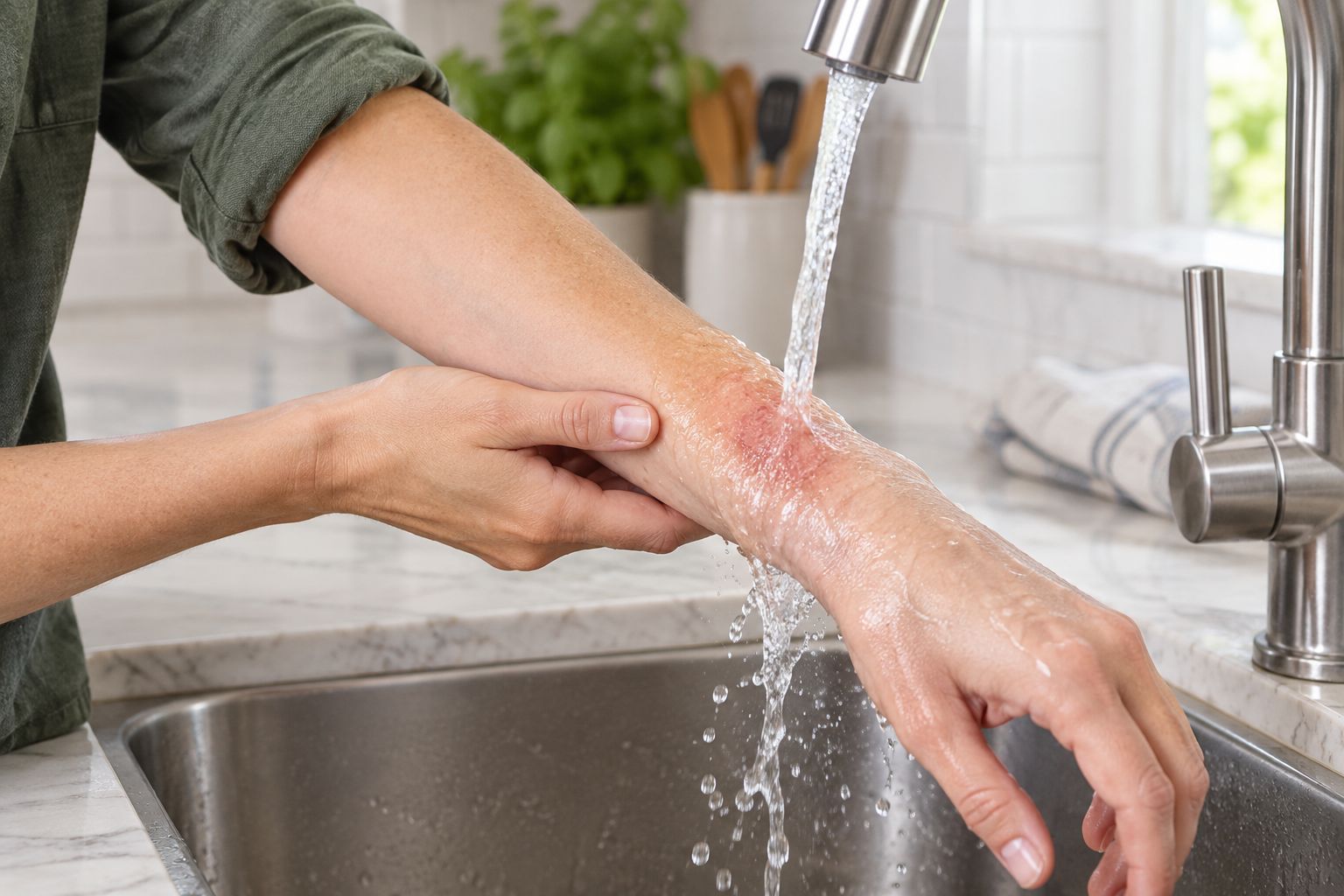
2. Cool and protect the burn in the first two to three weeks
What happens in the first few weeks after a grease splash sets the stage for how the eventual scar behaves. Skip the folk remedies — butter and ice both make burns worse, not better.
- Cool running water for 10-20 minutes immediately after the burn
- A non-stick dressing, changed daily or per a clinician's guidance
- No ice, no butter, no toothpaste on the burn
- Watch for spreading redness, pus, or fever — signs of infection
- Keep the area out of direct sun while it's still healing
3. Start silicone treatment once new skin has formed
This is where scar cream for kitchen burn scars actually begins working. Silicone hydrates the outer layer of new skin and regulates collagen production underneath it, which is what keeps a scar flat instead of raised.
- Apply a thin layer of silicone gel once or twice daily
- Or wear a silicone sheet 12-24 hours a day, per product instructions
- Wash silicone sheets with mild soap and let them air-dry for reuse
- Reapply gel after handwashing, since hands touch water constantly in a kitchen
- Give it 8-12 weeks minimum before judging results
4. Protect the scar from the sun every time you're near the stove or outside
A window over the sink, a walk to the car, a summer barbecue — forearms and hands pick up UV exposure constantly, and a healing scar tans and darkens faster than the skin around it.
- Broad-spectrum SPF on the scar daily, reapplied if hands are washed often
- Long sleeves or a kitchen towel draped over the forearm during peak sun hours
- Avoid direct, unprotected sun on the scar for at least 6-12 months
- Reapply sunscreen after cooking near a bright window, not just outdoors
- Keep the scar covered with silicone sheeting, which also blocks some UV
5. Track the scar's thickness and color every month
Scars change slowly enough that daily observation is useless — a monthly photo under the same lighting tells you far more.
- Take a photo at the same time each month, same light, same angle
- Note whether the scar is flattening, staying raised, or thickening
- Note any new itching, tightness, or color change
- Compare the scar to the surrounding skin tone, not to how it looked week one
- Flag a scar that's still raised or itchy after three months
“If a kitchen burn scar hasn't started flattening after eight weeks of consistent silicone wear, the answer is a dermatologist visit, not a different scar cream.”
6. Match the product to the burn's shape and location
A round grease splash on the back of the hand behaves differently than a streaked burn running up the forearm, and the product format should follow the shape.
- Irregular, small splash marks: a self-drying silicone gel that doesn't need cutting
- Flat, defined patches on the forearm: a reusable silicone sheet trimmed to the outline
- Scars over knuckles or joints that bend constantly: a silicone cream that moves with the skin
- Larger burns spanning several inches: a bigger sheet rather than several small ones pieced together
- Scars near hair-bearing skin: gel over sheeting, since sheeting can pull at hair when removed
7. Know when to call a dermatologist
Most kitchen burn scars respond to consistent home care. A subset don't, and catching that early saves months of wasted effort.
- The scar is raised, firm, and still growing after 3-4 months
- It's pulling or tightening skin near a joint (early contracture)
- It's spreading beyond the original burn's borders (possible keloid)
- It stays dark red or purple well past six months
- Pain or itching is worsening instead of settling
Kitchen burn scar treatment options compared
| Option | Best for | Format | Key limitation |
|---|---|---|---|
| RejûvaSil Silicone Scar Gel | Irregular, small grease-splash marks | Self-drying silicone gel | Needs reapplication once or twice daily |
| Scar-Esthetique Silicone Scar Cream | Scars on hands or fingers that bend constantly | Silicone cream | Less complete, even coverage than a sheet on a flat area |
| Scar Fx Silicone Sheet, 1.5" x 3" | Small, flat splash burns on the forearm | Reusable silicone sheet | Must be trimmed to the scar's outline; visible under short sleeves |
Verdict: for a single small grease splash mark, Scar Fx Silicone Sheeting is the more measurable option; for a scar that curves over a knuckle or wrist, RejûvaSil Silicone Scar Gel or Scar-Esthetique Silicone Scar Cream fit the shape better.


Common mistakes people make treating kitchen burn scars
- Starting silicone too early. Applying gel or sheeting before the burn has fully closed traps moisture against damaged skin and slows healing.
- Reaching for butter, ice, or toothpaste. These are common kitchen reflexes that make thermal damage worse, not first aid.
- Skipping sun protection because the burn is "just on the hand." Hands and forearms get more cumulative UV exposure than most covered surgical scars, and that exposure darkens a healing scar fast.
- Cutting a sheet too small for the actual scar. A trimmed edge that misses part of the burn leaves that untreated strip visibly darker than the rest.
- Quitting after two or three weeks. Silicone scar treatment in 2026 still follows the same clinical timeline it did a decade ago — flattening takes two to three months of daily use, not days.
FAQ
What's the best scar cream for kitchen burn scars?
For flat, well-defined splash marks, a reusable silicone sheet like Scar Fx flattens the scar with consistent daily wear. For irregular marks or scars over a joint, a silicone gel or cream such as RejûvaSil Silicone Scar Gel or Scar-Esthetique Silicone Scar Cream fits the shape better.
Can grease splash burns leave permanent scars?
Yes, especially partial-thickness burns that go deeper than the surface. Left untreated, a grease splash scar can stay raised or discolored indefinitely, though consistent silicone use over two to three months significantly improves texture and color.
When can you start using scar cream on a fresh burn?
Only after the burn has fully closed, with no blistering, drainage, or scabbing. Applying silicone products to open skin traps moisture against the wound and can delay healing.
Is silicone sheeting or silicone gel better for a stovetop burn scar?
Sheeting works best on flat, defined patches like a forearm burn, while gel suits irregular shapes or areas near a joint that need to keep bending. Neither is universally better — the burn's shape and location decide which format fits.
How long does it take for a grease burn scar to fade?
Clinical guidance on silicone scar treatment points to a minimum of two to three months of consistent daily wear before meaningful flattening appears. Full color fading, especially on sun-exposed hands, can take longer.
Do you need sun protection on a healed burn scar?
Yes, and it matters more than most people assume. A healing scar on the hand or forearm tans and darkens faster than surrounding skin, so daily SPF or covering the area is part of the treatment, not an afterthought.
What if the burn scar keeps getting darker?
Persistent darkening usually means ongoing sun exposure without protection, not a failure of the scar cream itself. Add daily SPF and sleeve coverage before assuming the product isn't working.
Can Rejûvaskin products be used on burn scars, not just surgical scars?
Rejûvaskin's silicone scar sheets and gels are built around the same silicone scar therapy used for surgical and burn scars alike, applied once the skin has closed. Check the current product page for specific use instructions before starting.
One last thing
The part of kitchen burn scar treatment people underinvest in isn't the silicone — it's the sun protection. A scar on the abdomen from surgery stays covered by clothing for most of the year; a scar on the hand or forearm from a grease splash is exposed to UV every single day standing at the stove, driving, or walking outside. In 2026, that daily exposure is still the single biggest reason a treated scar stays darker than expected months after it's fully flat.
Related guides
Leave a comment