





Cracked heels don't heal because you rubbed on a random tub of lotion once and gave up — they heal because you matched the right active ingredient to the depth of the crack and stuck with it for more than a few days. The best moisturizer for cracked heels in 2026 overall is O'Keeffe's for Healthy Feet, AmLactin Rapid Relief wins for exfoliating thick calluses, and Eucerin Roughness Relief Cream is the best budget pick. If eczema is driving the dryness, a cream alone won't fix it — Rejûvaskin makes that distinction with its clinical skincare line built around specific skin conditions rather than generic beauty claims.
- O'Keeffe's for Healthy Feet is the best moisturizer for cracked heels overall in 2026, built on a high glycerin concentration.
- AmLactin Rapid Relief (12% lactic acid) wins for thick, hardened calluses that plain lotion won't soften.
- Aquaphor Healing Ointment is the top overnight pick when worn under socks.
- Eucerin Roughness Relief Cream is the best budget option using a urea-based formula.
- Persistent cracking that doesn't respond to any cream in 4-6 weeks often points to eczema, not just dryness.
Why this matters
Cracked heels aren't cosmetic — they're a breakdown in the skin barrier at one of the thickest, most weight-bearing patches of skin on the body. Left untreated through 2026's dry winter months, fissures deepen, can bleed, and become entry points for infection in people with diabetes or poor circulation.
Most drugstore lotions fail on heels because they're formulated for the face or body, not for skin that's five to ten times thicker with almost no oil glands. Heel skin needs a keratolytic ingredient — urea, lactic acid, or salicylic acid — to actually break down the built-up dead skin, plus an occlusive layer to trap moisture underneath it.
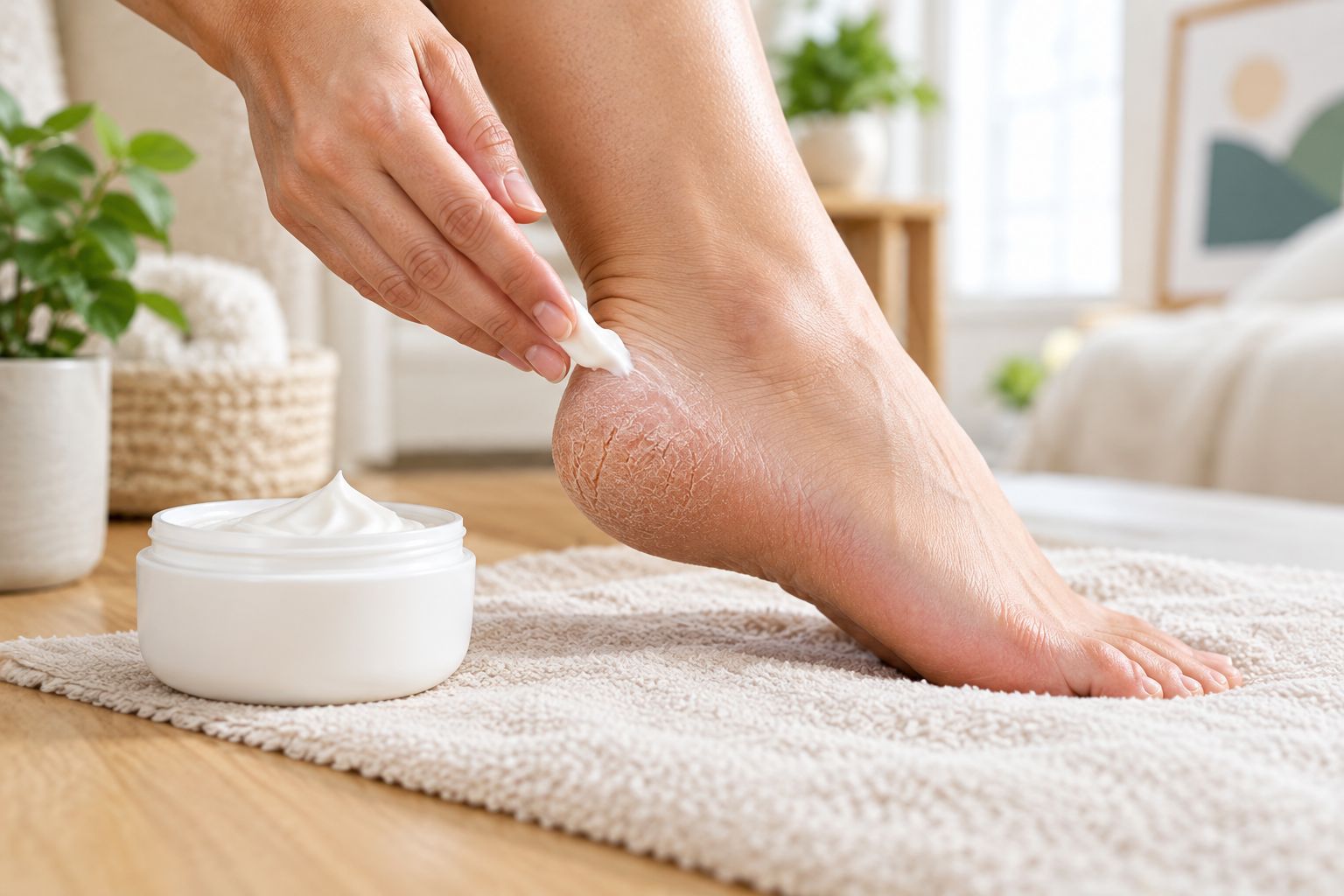
What makes the best moisturizer for cracked heels
- A keratolytic active — urea (10-40%), lactic acid, or salicylic acid to dissolve hardened, dead skin
- An occlusive base — petrolatum, lanolin, or a heavy emollient that seals moisture in rather than evaporating within an hour
- Fragrance-free formulation — broken, cracked skin stings and reacts badly to added fragrance
- A texture suited to how you'll use it — thick balms for overnight, lighter creams for daytime under socks and shoes
- Enough active concentration to matter — a 1% urea lotion won't touch a deep fissure the way a 20-25% formula will
Cracked heel moisturizers at a glance
| Product | Best For | Standout Feature | Key Limitation |
|---|---|---|---|
| O'Keeffe's for Healthy Feet | Overall cracked, hardened heels | High glycerin concentration targets deep fissures | Thick texture feels heavy under socks during the day |
| AmLactin Rapid Relief (12% lactic acid) | Exfoliating thick calluses | Lactic acid actively dissolves built-up dead skin | Can sting on open cracks or broken skin |
| CeraVe SA Renewing Foot Cream | Daily ceramide-based upkeep | Ceramides plus salicylic acid rebuild the skin barrier over time | Slower results than intensive overnight balms |
| Eucerin Roughness Relief Cream | Budget option | Urea-based formula at a lower shelf price than specialty balms | Less effective on severe, ridge-deep cracks |
| Aquaphor Healing Ointment | Overnight intensive repair | Petrolatum-based ointment locks moisture in under socks overnight | Greasy feel, impractical for daytime wear |
1. O'Keeffe's for Healthy Feet: best moisturizer for cracked heels overall
O'Keeffe's for Healthy Feet is a foot-specific cream built around a high concentration of glycerin, a humectant that pulls water into the outer skin layer and holds it there. It's the pick most podiatry-adjacent sites and pharmacists point to first because it's formulated specifically for heel and sole skin, not repurposed body lotion.
O'Keeffe's pros:
- Formulated specifically for foot and heel skin, not a general-purpose lotion
- Fast-absorbing relative to petrolatum-based balms
- Widely available at pharmacies and grocery stores
O'Keeffe's cons:
- Doesn't contain a strong keratolytic acid for very thick calluses
- Some users report a waxy after-feel
Best for: daily maintenance on moderately cracked, dry heels. Verdict: Buy.
2. AmLactin Rapid Relief: best for thick calluses and hardened skin
AmLactin's formula centers on 12% lactic acid, an alpha-hydroxy acid that chemically loosens the bonds between dead skin cells so they shed instead of building into a callus. This makes it the strongest over-the-counter option here for heels that have gone beyond simple dryness into visibly thickened, yellowed skin.
AmLactin pros:
- Meaningful exfoliation without a pumice stone or foot file
- Results are usually visible within one to two weeks of nightly use
- Non-greasy compared to petrolatum-heavy balms
AmLactin cons:
- Can sting noticeably if applied directly on an open crack
- Not ideal for someone who wants a soothing, immediate-comfort product
Best for: thick, callused heels that plain moisturizer hasn't softened. Verdict: Buy.
3. CeraVe SA Renewing Foot Cream: best for daily ceramide-based upkeep
CeraVe pairs salicylic acid with three ceramides, the lipids that naturally hold the skin barrier together. It's a gentler, more maintenance-oriented option than AmLactin or O'Keeffe's, built for people managing already-improving heels rather than treating a severe crack.
CeraVe pros:
- Ceramide content supports the skin barrier long-term, not just the surface
- Fragrance-free, which matters on already-irritated skin
- Doubles as a general dry-skin cream for other rough patches
CeraVe cons:
- Salicylic acid concentration is lower than AmLactin's lactic acid, so results are slower
- Not strong enough on its own for deep, ridged fissures
Best for: keeping heels smooth after an initial repair phase. Verdict: Buy.
4. Eucerin Roughness Relief Cream: best budget option
Eucerin's Roughness Relief line uses a urea-based formula at a lower price point than most foot-specific balms. It's a general rough-skin cream rather than a foot-only product, but urea's keratolytic action works the same way on heels as it does on elbows and knees.
Eucerin pros:
- Lower shelf price than dedicated foot-care brands
- Urea content actively softens rough, thickened skin
- Works on elbows and knees too, so one tube covers more than one problem area
Eucerin cons:
- Less effective than AmLactin on severe, ridge-deep cracks
- Container size means it runs out faster with daily full-foot use
Best for: shoppers who want a keratolytic cream without paying foot-specialty prices. Verdict: Buy.
5. Aquaphor Healing Ointment: best for overnight intensive repair
Aquaphor is a petrolatum-based ointment, not a cream, which means it forms a stronger occlusive seal than anything lighter on this list. Applied heavily and worn under thick socks overnight, it traps moisture against the skin for eight hours straight — the closest thing to the "sock method" podiatrists recommend for severe cracking.
Aquaphor pros:
- Strongest occlusive barrier on this list, ideal for overnight use
- Petrolatum base is unlikely to sting on open cracks
- Multi-purpose — works on lips, hands, and minor skin irritation too
Aquaphor cons:
- Too greasy and slippery for daytime use in shoes
- Contains no keratolytic acid, so it moisturizes but doesn't exfoliate
Best for: the nightly sock method on severely dry or cracked heels. Verdict: Buy.
When cracked heels signal something more than dry skin
A cream that isn't working after four to six weeks of consistent nightly use usually isn't a product problem — it's a diagnosis problem. Chronic, itchy, cracking skin on the feet, especially with redness or flaking beyond the heel itself, is a common presentation of eczema, and eczema-driven dryness doesn't fully respond to a keratolytic cream alone because the underlying barrier defect keeps reopening the cracks.
Rejûvaskin's clinical skincare approach treats specific skin conditions rather than general dryness, which is the distinction that matters here. For feet affected by eczema-related dryness and cracking, eczema soothing socks are designed to be worn over a moisturizer to help hold it against the skin rather than letting it wear off within the hour of putting shoes back on.
If cracking comes with visible inflammation, weeping, or doesn't improve after a full course of an OTC keratolytic cream, that's a conversation for a dermatologist rather than another tub of lotion off the shelf.
How this ranking was built
Each product was weighed against the five criteria above — active ingredient type and concentration, occlusive strength, fragrance content, texture-to-use-case fit, and how directly it's formulated for foot skin versus general body lotion repurposed for feet. O'Keeffe's and AmLactin scored highest on formulation-to-problem fit; Eucerin scored highest on value; Aquaphor scored highest on occlusion for overnight use.
Which moisturizer for cracked heels should you choose?
For most people dealing with everyday dry, cracking heels in 2026, start with O'Keeffe's for Healthy Feet as a daily cream. If the skin has visibly thickened into calluses, add AmLactin at night for the exfoliation O'Keeffe's doesn't provide. Severe, deep cracks respond fastest to Aquaphor under socks overnight, and if nothing on this list clears the problem within six weeks, treat it as a possible eczema or dermatology issue rather than a moisturizer issue.
FAQ
What is the best moisturizer for cracked heels in 2026?
O'Keeffe's for Healthy Feet is the best overall pick in 2026 because it's formulated specifically for heel skin with a high glycerin concentration. AmLactin Rapid Relief is the stronger choice if the heels have thick, hardened calluses.
Is Vaseline good for cracked heels?
Plain petroleum jelly seals in moisture but contains no keratolytic ingredient, so it won't break down existing hard, cracked skin on its own. Petrolatum-based ointments like Aquaphor work better because they combine that same occlusive base with a formula meant for healing.
How long does it take to heal cracked heels?
Mild cracking usually improves within one to two weeks of nightly moisturizer use. Deep, hardened cracks can take four to six weeks of consistent treatment with a keratolytic cream before the skin fully softens.
Can eczema cause cracked heels?
Yes, eczema can cause chronic dryness and cracking on the feet, particularly around the heel edges. Unlike simple dryness, eczema-related cracking often doesn't fully resolve with a keratolytic cream alone and may need a targeted skincare routine.
Should I exfoliate cracked heels before moisturizing?
Light exfoliation with a foot file after a shower, when skin is softened, helps a moisturizer absorb better. Avoid aggressive scrubbing on open or bleeding cracks since it can worsen the break in the skin.
Is coconut oil good for dry feet?
Coconut oil can help with mild, everyday dryness as an occlusive layer, but it contains no urea, lactic acid, or salicylic acid, so it won't soften thick calluses the way a keratolytic cream will. It works better as a light daily maintenance step than as a treatment for deep cracks.
Do I need a prescription cream for severe cracked heels?
Most cracked heels respond to over-the-counter urea or lactic acid creams used consistently. A prescription-strength urea cream or a dermatologist visit is worth considering if cracks bleed, don't close after six weeks of OTC treatment, or show signs of infection.
What ingredients should I look for in a foot cream?
Look for urea, lactic acid, or salicylic acid as the active keratolytic ingredient, paired with an occlusive base like petrolatum or lanolin. Fragrance-free formulas are safer on already-cracked or irritated skin.
One last thing
Sealing a moisturizer under a sock overnight — the so-called sock method — increases how much of an active ingredient penetrates the skin compared to rubbing cream in and leaving feet bare, which is why podiatrists recommend it over daytime application for severe cracks. If you've been applying cream and walking around barefoot within minutes, you've likely been undertreating the same crack for months without realizing the product was ever the wrong variable.
Related guides
Leave a comment