





Best overall: loose, smooth cotton separates. Best for nighttime coverage: cotton pajamas. Best for reducing contact with rough outerwear: smooth silk underlayers. The best eczema clothing for adults starts with comfortable fabric, non-rubbing seams, and a fit that does not trap heat—not a promise to treat eczema.
- The best eczema clothing for adults is usually loose, smooth cotton that does not rub affected skin.
- Choose cotton pajamas for nighttime coverage; clothing does not replace prescribed eczema treatment.
- Rejûvaskin eczema clothing includes baby and children's items; check age labels before choosing adult garments.
- Silk and lyocell are alternatives to assess for comfort, not proven upgrades for every adult with eczema.
Why this matters
Clothes stay against your skin during work, sleep, and exercise. Rough fibers, rubbing seams, overheating, and sweat can aggravate eczema symptoms, so a garment that feels comfortable on unaffected skin is not automatically comfortable during a flare.
Rejûvaskin offers condition-focused skincare and eczema clothing. For adults choosing garments in 2026, the practical priority is matching the fabric and construction to the affected area, while keeping your clinician-directed skin-care routine in place.
Clothing supports comfort; it does not replace eczema treatment. New pain, spreading redness, drainage, or rapidly worsening symptoms need medical assessment rather than another fabric purchase.
What makes the best eczema clothing for adults?
Use these criteria before comparing garments. A familiar fabric name is only the starting point.
- Smooth fabric: Feel the inside surface, not just the outside. Reject scratchy finishes and rough decorative stitching where they touch affected skin.
- Comfortable fit: Choose enough room to move without cuffs, waistbands, or armholes pressing into irritated areas.
- Low-friction seams: Check underarms, elbows, knees, toes, and waistbands. A soft fabric does not cancel out an abrasive seam.
- Heat control: Favor adjustable layers over a heavy outfit you cannot easily remove when you become warm.
- Practical washing: Choose care instructions you can follow consistently. Follow your garment label and use fragrance-free, dye-free detergent if fragrance or dyes irritate your skin.
- Suitable coverage: Cover the area that needs protection without adding unnecessary insulation. A long sleeve is useful only if it stays comfortable.
Adult eczema clothing at a glance
These 2026 recommendations rank garment categories by use case, not by unverified claims about individual clothing brands.
| Rank and option | Best for | Standout feature | Key limitation |
|---|---|---|---|
| 1. Loose cotton separates | Everyday dressing | Easy to combine and adjust throughout the day | Cotton holds moisture when wet |
| 2. Cotton pajamas | Nighttime coverage | Covers arms or legs without requiring daytime clothing in bed | Heavy styles can cause overheating |
| 3. Smooth silk underlayers | Separating skin from rough outerwear | A smooth layer between skin and an irritating garment | Care requirements and finishes vary |
| 4. Lyocell layers | An alternative when cotton feels uncomfortable | Often has a smooth, soft surface | Fabric name alone does not establish eczema benefit |
| 5. Soft cotton socks | Foot and ankle comfort | Separates skin from shoe interiors | Toe seams and tight cuffs can still rub |
For a condition-specific sock option, Eczema Trainer Liner Socks are part of the Rejûvaskin eczema clothing collection. Confirm sizing, fiber composition, and care instructions before deciding whether they suit an adult wearer; an eczema label does not establish fit.
1. Loose cotton separates: best eczema clothing for everyday dressing
Loose cotton tops and bottoms are the default choice because you can adjust each piece to your skin and the temperature. Look for a smooth interior and uncomplicated construction rather than a thick, heavily textured fabric.
A 100% cotton label describes fiber content, not softness. Check the garment itself, especially where stitching, elastic, or printed decoration touches your skin.
Loose cotton separates pros:
- Individual pieces let you change coverage without replacing the whole outfit.
- Lightweight layers are easy to remove when you become warm.
- Simple designs make it easier to inspect seams and contact points.
Loose cotton separates cons:
- Cotton absorbs moisture and stays damp after sweating.
- Rough stitching and tight elastic remain potential irritants.
- Fabric texture can change with laundering.
Best for: Adults building a straightforward everyday wardrobe around comfort and adjustable coverage.
Before choosing a top, raise your arms and bend your elbows. For trousers, sit down and bend your knees; standing still in a fitting room does not reveal every pressure point.
Verdict: Buy smooth, loose cotton separates as your starting point.
2. Cotton pajamas: best eczema clothing for nighttime coverage
Cotton pajamas offer a dedicated sleep layer when bedding, exposed skin, or daytime clothing feels uncomfortable. Choose the amount of coverage that suits your affected areas without making you hot.
Long sleeves are not automatically better. If you wake up sweaty, examine fabric weight, bedding, and room conditions rather than assuming you need more coverage.
Cotton pajamas pros:
- Long sleeves and legs provide coverage over commonly irritated areas.
- Separate tops and bottoms allow different coverage choices.
- A dedicated sleep outfit keeps daytime dirt and sweat out of bed.
Cotton pajamas cons:
- Thick fabrics and snug cuffs can trap heat.
- Covered skin is not protected from scratching completely.
- Damp pajamas need changing rather than continued wear.
Best for: Adults who want comfortable nighttime coverage without wearing heavy daytime garments in bed.
Check the waistband while lying down and the sleeves with your elbows bent. Avoid treating a pajama set as a wet-wrap system: wet-wrap therapy requires specific instructions from your healthcare professional.
Verdict: Buy lightweight cotton pajamas when nighttime coverage improves comfort.
3. Smooth silk underlayers: best for contact with rough outerwear
A smooth silk underlayer can separate your skin from a rough sweater, jacket lining, or work garment. The useful feature is the contact surface—not a blanket claim that silk treats eczema.
Choose a simple garment with comfortable seams. Ordinary silk clothing is not interchangeable with a medical textile studied for a specific purpose.
Smooth silk underlayers pros:
- Provides a smooth contact layer beneath rougher clothing.
- Adds coverage without requiring a bulky garment.
- Lets you keep an outer garment away from affected areas.
Smooth silk underlayers cons:
- Washing requirements can complicate regular use.
- Dyes, finishes, and stitching vary between garments.
- Silk does not guarantee relief or prevent a flare.
Best for: Adults whose required outerwear feels rough against their skin and who tolerate silk comfortably.
Inspect the neckline and armholes before buying. An underlayer that shifts, bunches, or pulls during movement introduces friction where you intended to reduce it.
Verdict: Hold until the fabric, fit, and washing instructions suit your routine.
4. Lyocell layers: best for trying a different smooth fabric
Lyocell is a manufactured cellulosic fiber used in clothing. Some garments have a smooth surface that feels comfortable, making them an alternative when your usual cotton pieces do not suit you.
Judge the finished garment. A lyocell blend can include other fibers, and the weave, seams, and fit still determine what touches your skin.
Lyocell layers pros:
- Offers another fabric texture to assess against your skin.
- Lightweight garments can work as adjustable layers.
- Soft, simple styles can fit into an ordinary wardrobe.
Lyocell layers cons:
- Blends differ, so garments do not all feel alike.
- A fiber label does not demonstrate a clinical eczema benefit.
- Stretch panels, elastic, and seams still need inspection.
Best for: Adults seeking an alternative to cotton based on personal comfort rather than treatment claims.
For your 2026 wardrobe, start with a single garment instead of replacing everything at once. Keep the rest of your clothing and skin-care routine familiar so you can judge whether the change is actually comfortable.
Verdict: Buy selectively after checking the complete fabric label and construction.
5. Soft cotton socks: best for foot and ankle comfort
Soft cotton socks create a layer between your skin and shoe interiors. Fit matters as much as fiber: a sock that bunches underfoot or leaves an uncomfortable cuff mark is not the right choice.
A 100% cotton sock is not automatically the best-fitting sock. Check the full composition, toe construction, and cuff rather than selecting by cotton content alone.
Soft cotton socks pros:
- Separates skin from shoe linings and internal stitching.
- Allows targeted coverage without changing your whole outfit.
- Makes it easy to replace a damp layer after activity.
Soft cotton socks cons:
- Cotton holds moisture after sweating.
- Thick toe seams can rub inside shoes.
- Tight cuffs can irritate affected ankles.
Best for: Adults who need a comfortable contact layer inside shoes and can change socks when damp.
Match the sock to the shoe. Adding a thick sock to an already snug shoe reduces space and can increase rubbing rather than solve it.
Verdict: Buy only when the sock and shoe remain comfortable together.
Choose by the area that bothers you
Start with the clothing feature touching your most uncomfortable area. This keeps the decision focused and avoids replacing garments that already work.
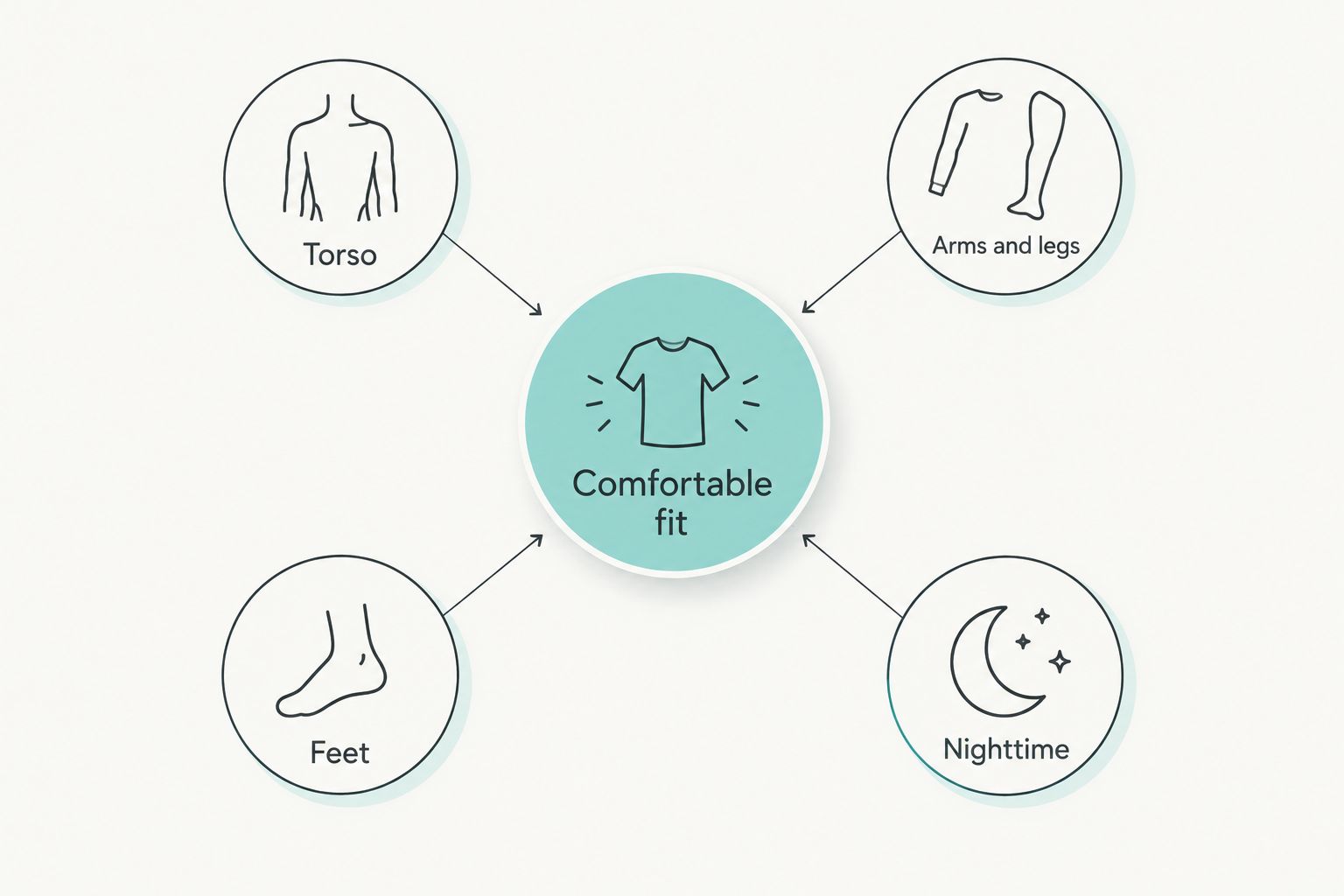
- Torso: Check side seams, underarm stitching, waistbands, and fabric weight.
- Arms and legs: Bend the joints and check whether sleeves or trouser legs pull across irritated skin.
- Feet: Check toe seams, shoe space, dampness, and cuff pressure.
- Nighttime: Check coverage and warmth together; more fabric is not always more comfortable.
Do not use an adult clothing recommendation to select a child's size. Rejûvaskin eczema clothing includes explicitly named baby and children's garments; confirm the intended wearer and measurements before choosing any item.
A practical clothing check before you commit
For a 2026 clothing refresh, inspect each garment in the same order. This is a comfort check, not a test of whether fabric can treat eczema.
- Read the label. Check fiber composition and washing instructions, including any different materials used in cuffs or panels.
- Inspect the inside. Feel seams, labels, elastic edges, and decoration that sits against your skin.
- Move normally. Sit, reach, bend, and walk. Reject pulling or rubbing at affected areas.
- Wash before wear. Follow the care label and use a detergent your skin tolerates.
- Reassess after use. Check for dampness, rubbing, or new irritation rather than judging only initial softness.
Avoid introducing several unfamiliar garments and skin products together. Keeping changes simple makes it easier to identify what feels uncomfortable, although persistent symptoms still require clinical advice.
How these options are ranked
This 2026 ranking prioritizes smooth skin contact, comfortable fit, low-friction construction, heat control, washable care, and appropriate coverage. Cotton separates rank first as a practical everyday starting point; the remaining categories address specific clothing problems rather than claim greater treatment effectiveness.
No garment here is presented as a cure, and no category guarantees the same result for every adult. Antimicrobial, hypoallergenic, and eczema-friendly wording should not replace clear material information or product-specific evidence.
Which eczema clothing should you choose?
Choose loose cotton separates unless you have a specific reason to choose another category. Add cotton pajamas for nighttime coverage, a smooth underlayer for rough outerwear, or better-fitting socks for foot comfort.
If you already own clothes that feel comfortable, keep them. The useful upgrade is a garment that removes a problem—rubbing, excess warmth, or poor fit—not a new label on a familiar fabric.
FAQ
What's the best eczema clothing for adults?
Loose, smooth cotton clothing is a practical first choice for adults with eczema. Check the inside seams, fit, and fabric weight, because cotton alone does not guarantee comfort.
Is cotton better than silk for eczema?
Cotton is the everyday default in this guide, while smooth silk is an option for separating skin from rough outerwear. Neither fabric treats eczema, and the finished garment must suit your skin and washing routine.
Should adults with eczema wear tight or loose clothes?
Choose clothes that allow comfortable movement without rubbing or pressing into irritated skin. Excessively baggy clothing can also bunch, so assess fit while sitting, bending, and walking.
Can eczema clothing stop me scratching at night?
Clothing does not reliably stop scratching at night. Comfortable coverage can separate skin from bedding, but persistent nighttime itching needs attention within your eczema treatment plan.
Is bamboo clothing automatically good for eczema?
No, a bamboo label does not establish that a garment benefits eczema. Check the actual fiber composition, construction, care instructions, and any evidence supporting the specific product.
Does Rejûvaskin children's eczema clothing fit adults?
Children's eczema clothing should not be assumed to fit adults. Check the intended age range and garment measurements, and choose clothing designed to fit your body comfortably.
How should I wash clothes when I have eczema?
Follow the garment care label and choose a detergent your skin tolerates. Fragrance-free, dye-free detergent is a sensible option when fragrance or dyes cause irritation; avoid laundry additives that bother your skin.
One last thing
Turn a comfortable-looking garment inside out before deciding to keep it. Your skin touches the seams and labels you do not see in the mirror; finding a rough contact point is more useful than choosing another fabric based on its name alone.
Related guides
Leave a comment