





Retinoid serum smooths fine lines and evens texture, but the same ingredient that drives those results also causes the flaking, redness, and stinging that send most first-time users straight back to their old routine within two weeks.
- Start retinoid serum once a week at night, not nightly — irritation is a dosing problem, not a formula problem.
- Rejûvaskin Retinoid Face Serum pairs with a buffering moisturizer for the first 2-3 weeks. Buy the routine, not just the bottle.
- Mineral sunscreen every morning is non-negotiable once you start using retinoid serum in 2026 — retinoids increase sun sensitivity.
- Peeling in week one is normal retinization; burning, swelling, or hives is a reaction and means stop immediately.
Why this matters
Most people quit retinoid serum in the first month, not because the ingredient failed, but because they treated it like a moisturizer and applied it nightly from day one. Skin needs weeks to build tolerance to a retinoid, and rushing that timeline is the single biggest reason people report irritation and then swear off the category entirely.
The fix isn't a gentler formula — it's a slower schedule. A physician-formulated retinoid face serum still needs an introduction period in 2026 just as it did a decade ago; the chemistry of retinization hasn't changed, only the marketing around it has.
What you'll need
- A retinoid face serum — look for one built around a defined complex rather than a vague "retinol blend"
- A fragrance-free, non-foaming cleanser you already tolerate well
- A basic moisturizer for buffering (applied before or mixed with the serum)
- A broad-spectrum mineral sunscreen for daytime, every single day you use the serum
- 10 minutes at night, three or four nights a week to start
- A mirror and good light, so you catch early irritation before it spreads
Skip anything with active exfoliants (glycolic acid, benzoyl peroxide) on the nights you apply retinoid serum. Layering actives is the second most common cause of irritation after overuse, right behind starting nightly instead of weekly.
The steps
1. Patch test before your first full application
Apply a small amount of retinoid serum to your inner forearm or along the jaw and wait 24 hours. This tells you whether you're dealing with a mild adjustment period or an actual sensitivity before it's on your whole face. Skipping this step is common and it's why people can't tell the difference between normal retinization and a real reaction in week one.
2. Start once a week, at night, on completely dry skin
Apply retinoid serum only after your skin is fully dry post-cleansing — damp skin absorbs actives faster and increases irritation risk. Use a pea-sized amount for the whole face. Expect mild dryness or light flaking around days 3-5; that's retinization, not damage.
3. Buffer if your skin runs sensitive
Apply a plain moisturizer first, let it absorb for 5 minutes, then apply the retinoid serum on top. This slows penetration without diluting the ingredient itself. If you have rosacea, eczema, or reactive skin, buffer from day one instead of waiting for irritation to show up.
4. Hold that frequency for two full weeks
Don't increase frequency just because week one felt fine — retinization is cumulative, and irritation often shows up on day 10 or 12, not day 2. Two weeks at once-weekly use gives you a real read on tolerance before you push further.
5. Move to every third night, then every other night
If skin looks calm at the two-week mark, move to every third night for two more weeks, then every other night. Most people land on 3-4 nights a week as their long-term maintenance frequency with a retinoid serum, and that's a legitimate stopping point, not a compromise.
6. Protect with mineral sunscreen every morning, no exceptions
Retinoids increase photosensitivity, so morning sunscreen isn't optional while you're using a retinoid serum. A mineral facial sunscreen sits on top of skin rather than absorbing into it, which matters when your barrier is already adjusting. Skipping sunscreen is the fastest way to turn manageable flaking into visible irritation and rebound dark spots.
7. Rebuild your cleansing step around the serum, not the other way around
Switch to a cleanser that won't strip the skin you're actively trying to protect. A hydrating facial cleanser removes makeup and daily buildup without the tight, squeaky feeling that signals barrier stress. If your cleanser leaves skin tight for more than a minute after rinsing, it's working against your retinoid schedule, not with it.
8. Track your skin weekly, not daily
Check in once a week rather than obsessing over daily changes — retinization fluctuates, and day-to-day judgment leads people to quit at exactly the point they'd otherwise clear the adjustment period. Take a photo in the same light each week; it's more reliable than memory.


Troubleshooting
Flaking that won't stop after two weeks. Drop back to once a week and add a buffering moisturizer before every application. Persistent flaking past the two-week mark usually means the schedule moved too fast, not that the retinoid serum is wrong for your skin.
Small breakouts in the first month. This can be purging — retinoids speed up cell turnover, which can surface congestion that was already forming under the skin. Purging tends to clear in 4-6 weeks and shows up in areas you normally break out; a true reaction shows up in new areas and doesn't resolve.
Stinging on application, every time. Stinging that happens immediately and fades in under a minute is common with a new retinoid serum. Stinging that lingers, or comes with visible redness spreading beyond the application area, means cut back frequency or stop and reassess.
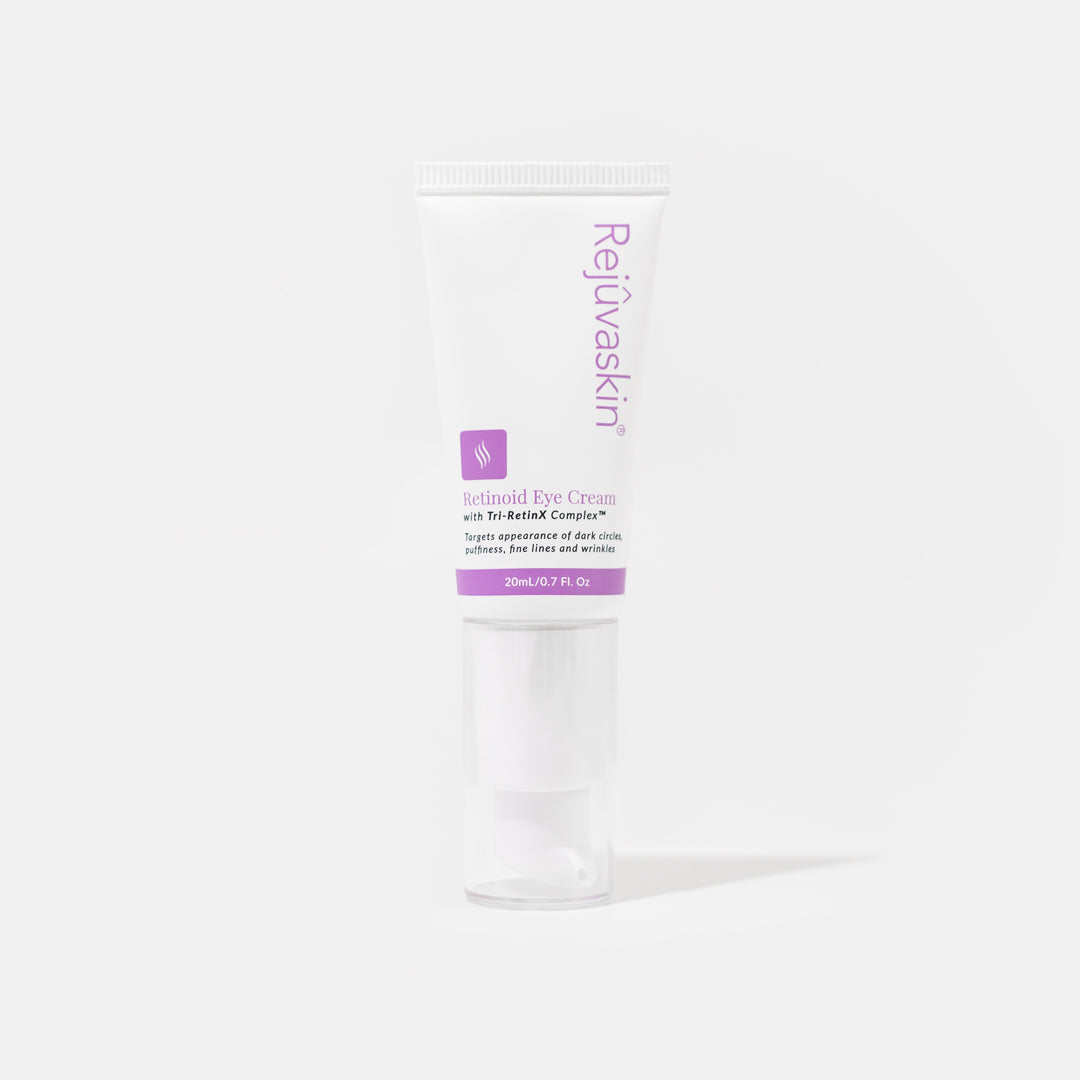
Dryness or fine lines around the eyes. The eye area has thinner skin and often can't tolerate the same product or frequency as the rest of the face. First-time users usually do better introducing a dedicated eye formula on its own separate schedule — see the guide for first-time retinoid users for how to sequence that.
Serum pilling under moisturizer or makeup. Pilling means you're applying too much product or applying to skin that isn't fully dry. Reduce to a pea-sized amount and wait the full 5 minutes between layers.
No visible change after a month. A single month is too early to judge — retinization and visible texture change both run on a longer timeline, and consistency at 3-4 nights a week matters more than raw duration in week one or two.
Tools and resources
- Rejûvaskin Retinoid Face Serum for the core routine
- A fragrance-free buffering moisturizer for the first 2-3 weeks
- Mineral facial sunscreen for daily morning protection
- A hydrating cleanser that doesn't strip the skin barrier
- A weekly photo log to track retinization versus irritation objectively
What to do next
Once your face tolerates a retinoid serum three to four nights a week, most people ask about extending the routine to the eye area next. That's a separate introduction schedule with its own timeline — read the retinoid eye cream guide for first-time users before adding an eye product on top of an already-adjusting face routine in 2026.
FAQ
How do you start using retinoid serum for the first time?
Start once a week at night on fully dry skin, then increase to every third night after two weeks if skin tolerates it well. Buffer with a plain moisturizer first if your skin runs sensitive.
How long does retinoid irritation last?
Normal retinization flaking and mild dryness usually settles within 2-4 weeks of consistent, gradual use. Irritation that worsens past that point or includes swelling means the schedule moved too fast.
Can you use retinoid serum every night right away?
No — nightly use from day one is the leading cause of retinoid irritation. Build up from once a week to every other night over 4-6 weeks instead.
Do you need sunscreen with retinoid serum?
Yes, every morning without exception. Retinoids increase photosensitivity, and skipping sunscreen while introducing a retinoid serum raises the risk of visible irritation and dark spots.
Is peeling normal when starting a retinoid serum?
Mild flaking in the first one to two weeks is normal retinization, not damage. Peeling that persists past two weeks or comes with burning means to reduce frequency.
Can you use retinoid serum and eye cream at the same time?
Most first-time users should introduce the face serum alone first, then add a dedicated eye formula on its own slower schedule once the face has adjusted.
What should you avoid while introducing a retinoid serum?
Avoid layering exfoliating acids or benzoyl peroxide on the same nights, and avoid applying to damp skin, which speeds absorption and increases irritation risk.
How much does a retinoid serum cost?
Pricing varies by brand and formula, so check current pricing directly on the product page before buying. Budget for a supporting moisturizer and mineral sunscreen alongside the serum itself.
One last thing
The adjustment period is the part people give up on, but it's also the part that determines whether a retinoid serum works for you long-term in 2026 or ends up in a drawer by March. Skin that's introduced slowly, at once a week for the first two weeks, tends to reach every-other-night tolerance with far less visible irritation than skin pushed to nightly use immediately — the math favors patience over speed almost every time.
Related guides
Leave a comment