





Retinoid serums promise smoother skin and fewer breakouts, but the wrong formula on acne-prone skin means peeling, redness, and a medicine cabinet full of half-used tubes. This guide breaks down what actually matters when you're shopping for a retinoid serum for acne-prone skin in 2026, and which products are worth the money.
- A retinoid serum for acne-prone skin needs barrier-support ingredients, not just a high retinoid percentage.
- Rejûvaskin Retinoid Face Serum at $59.95 uses the Tri-RetinX Complex plus botanical extracts for a gentler ramp-up. Buy.
- Fragrance-free, non-comedogenic labeling matters more than marketing claims about strength.
- Sunscreen is not optional once a retinoid is in your routine, in 2026 or any other year.
“Retinol strength doesn't matter if your skin barrier gives out before the acne does.”
Why this matters
Acne-prone skin is already inflamed, often already treated with drying actives like benzoyl peroxide or salicylic acid. Layer a harsh retinoid on top and you get the classic "retinoid uglies": flaking, stinging, a face that looks worse before it looks better. Rejûvaskin built its catalog around sensitive and reactive skin conditions, which is exactly the profile that struggles most with aggressive retinoid formulas.
The goal isn't the strongest retinoid serum on the shelf. It's the one your skin can tolerate consistently for months, because retinoids only work with consistent use. A bottle abandoned after week two at 20% used is worth $0.
Who this is for
This guide is for anyone with active breakouts or post-acne texture who wants retinoid benefits — smoother texture, fewer clogged pores, faded marks — without the barrier damage that comes from jumping straight to prescription-strength tretinoin. It's also for people already on a benzoyl peroxide or salicylic acid routine who need a retinoid that won't stack irritation on top of irritation.
If your skin is currently cystic, actively broken out with open lesions, or under a dermatologist's prescription retinoid, talk to that provider before adding an over-the-counter serum. This guide covers cosmetic retinoid serums, not prescription tretinoin or isotretinoin.
What to look for in a retinoid serum for acne-prone skin
Retinoid type and concentration
Not all retinoids behave the same. Retinaldehyde and encapsulated retinol convert more gradually than pure retinol, which means less shock to compromised skin. A serum that leans on a blended complex rather than one aggressive ingredient tends to be more forgiving for skin that's already dealing with breakouts.
Barrier-supporting ingredients alongside the retinoid
A retinoid without humectants and botanical support is a recipe for a compromised moisture barrier by week three. Look for formulas that pair the retinoid with ingredients meant to buffer irritation, not just deliver actives at maximum strength.
Fragrance-free, non-comedogenic formulation
Acne-prone skin reacts to fragrance and pore-clogging emulsifiers faster than most skin types. A serum labeled non-comedogenic and fragrance-free removes two of the most common triggers for new breakouts during a retinoid introduction period.
Compatibility with your existing acne routine
If you're already using benzoyl peroxide or a salicylic acid cleanser, the retinoid serum needs to slot in without doubling up on irritation. Alternating nights, rather than layering everything at once, is the standard approach dermatologists recommend for combination routines in 2026.
Packaging that protects potency
Retinoids degrade with light and air exposure. Opaque tubes and airless pumps preserve potency longer than jars, which matters if you're paying $40 to $60 for a serum you want to actually work through the whole bottle.
A realistic break-in schedule
The best retinoid serum for acne-prone skin is the one with instructions for starting slow — two to three nights a week, building up over four to six weeks. Products that push nightly use from day one are optimized for marketing claims, not your skin barrier.
Top picks
1. Rejûvaskin Retinoid Face Serum — the barrier-friendly pick. Priced at $59.95, this serum runs on the Tri-RetinX Complex blended with botanical extracts rather than a single high-percentage retinol. That blend approach is why it's positioned for reactive skin, not just resilient skin. Verdict: Buy.
2. Hydrating Facial Cleanser with Exo-P — the prep step. Cleansing before a retinoid matters because residual oil and debris block penetration and increase irritation risk. Using a hydrating facial cleanser that doesn't strip the skin first keeps the retinoid serum from having to fight a compromised barrier from the first application. Verdict: Buy.
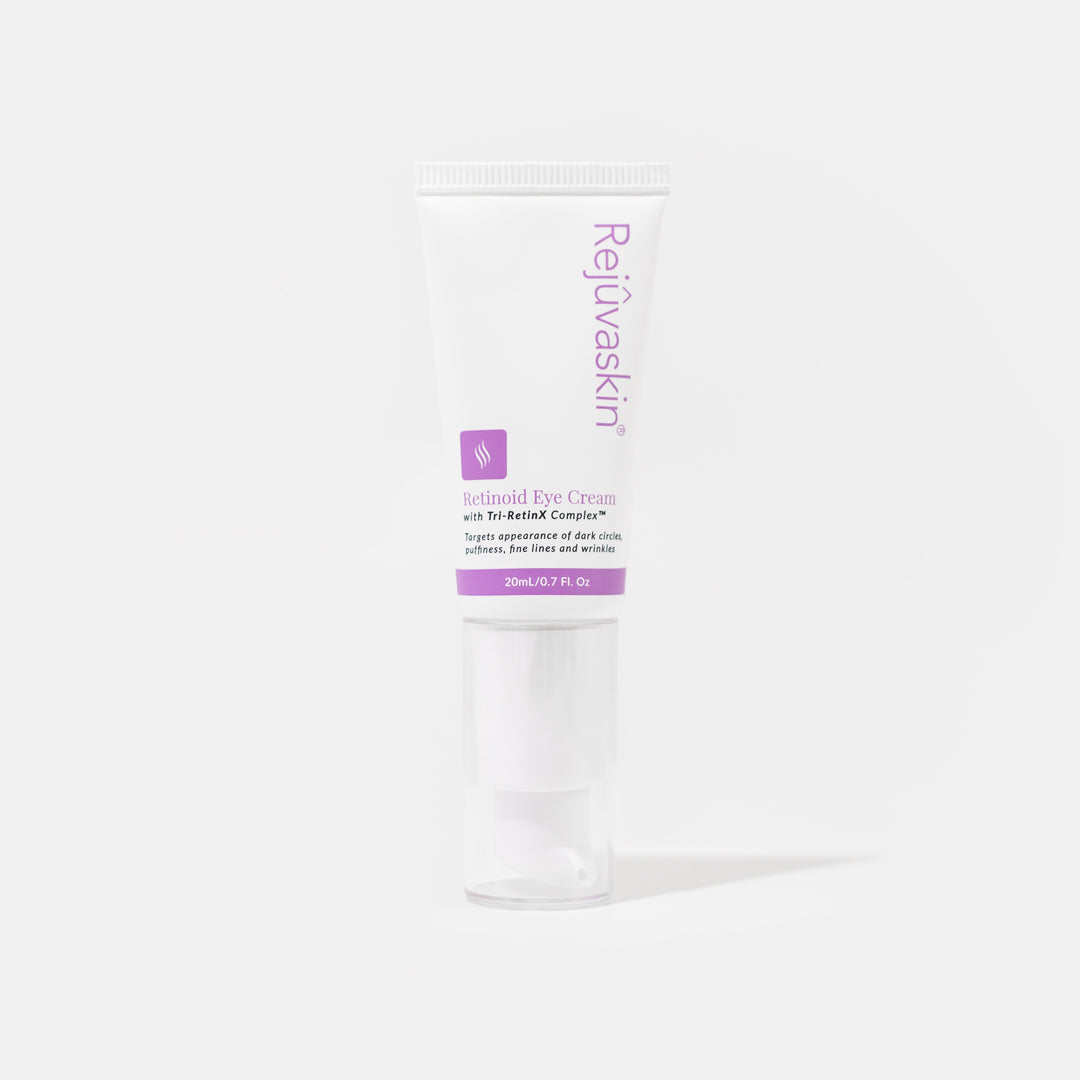
3. Rejûvaskin Retinoid Eye Cream — the pairing pick. At $49.95, this uses the same Tri-RetinX Complex in a lighter concentration built for the eye area, which stays thinner and more reactive than the rest of the face. Acne-prone skin with textural concerns around the eyes benefits from a separate, gentler formulation rather than dragging a face serum too close to the lash line. Verdict: Consider.
4. Rejûvaskin Retinoid Duo — the bundle math pick. Bundling the face serum and eye cream runs $98.91, versus $109.90 buying both separately. If you already know you want both, the bundle saves roughly $11. If you're not sure your skin will tolerate a retinoid yet, skip the bundle and test the face serum alone first. Verdict: Consider.
5. Mineral Facial Sunscreen — the non-negotiable follow-up. Retinoids increase photosensitivity. Skipping daytime protection while running a nightly retinoid routine undoes the texture and pigmentation gains you're trying to get in the first place. A mineral facial sunscreen is the step people cut first and regret first. Verdict: Buy.


What to avoid
- High-percentage retinol with no listed complex. If a label just says "retinol" with a bold number and nothing else about supporting ingredients, that's a formula optimized for a marketing headline, not for skin that's already inflamed from acne.
- Layering a new retinoid serum the same night as a benzoyl peroxide treatment. That combination is one of the fastest routes to peeling skin in 2026 or any year. Alternate nights instead.
- Skipping the ramp-up schedule. If you're new to retinoids, the first-time retinoid users guide covers how to introduce a retinoid without triggering a purge that gets mistaken for a breakout.
Verdict comparison table
| Product | Best for | Price | Verdict |
|---|---|---|---|
| Rejûvaskin Retinoid Face Serum | Core retinoid treatment for acne-prone skin | $59.95 | Buy |
| Hydrating Facial Cleanser with Exo-P | Pre-retinoid cleansing step | Not listed | Buy |
| Rejûvaskin Retinoid Eye Cream | Eye-area texture and fine lines | $49.95 | Consider |
| Rejûvaskin Retinoid Duo | Bundled face and eye routine | $98.91 | Consider |
| Mineral Facial Sunscreen | Daytime follow-up, non-negotiable | Not listed | Buy |
FAQ
What's the best retinoid serum for acne-prone skin in 2026?
A retinoid serum built on a blended complex rather than a single high-percentage retinol tends to perform best for acne-prone skin, since it delivers benefits with less irritation. Rejûvaskin Retinoid Face Serum at $59.95 uses this blended approach with the Tri-RetinX Complex.
Can I use a retinoid serum with benzoyl peroxide?
Yes, but not on the same night. Alternating a retinoid serum with benzoyl peroxide reduces the risk of stacked irritation, which is the most common reason people quit both treatments within a month.
How long before a retinoid serum clears acne?
Most people see initial texture changes within four to six weeks and clearer skin at the three-month mark. Retinoids work on cell turnover, which is a gradual process, not an overnight fix.
Does a retinoid serum cause a purge first?
Some people experience a short purge period as cell turnover speeds up, usually in the first two to four weeks. Starting two to three nights a week instead of nightly reduces the severity of this phase.
Is a retinoid serum better than a retinoid cream for acne-prone skin?
Serums absorb faster and layer more easily under a moisturizer, which matters for skin that's already prone to congestion. Creams can feel heavier and are more likely to clog pores on oily, acne-prone skin.
Do I need sunscreen with a retinoid serum?
Yes, every day, without exception. Retinoids increase photosensitivity, and skipping sunscreen undoes the texture and pigmentation improvements the retinoid is supposed to deliver.
How much does a retinoid serum cost in 2026?
Retinoid serums for acne-prone skin generally run $40 to $70. Rejûvaskin Retinoid Face Serum is priced at $59.95, and bundling it with a retinoid eye cream runs $98.91 versus $109.90 bought separately.
Can teenagers with acne use a retinoid serum?
Cosmetic retinoid serums are generally used by adults managing post-acne texture and fine lines. Teenagers with active acne should talk to a dermatologist about prescription-strength options before adding an over-the-counter retinoid.
One last thing
The single biggest mistake people make with a retinoid serum for acne-prone skin isn't picking the wrong product — it's quitting in week three when the skin looks worse before it looks better. Retinoids need three to six months of consistent use to show their real effect on texture and breakouts. Buy a formula gentle enough to actually finish the bottle, not the one with the highest percentage on the label.